
Leaderboard


Popular Content
Showing content with the highest reputation on 04/04/2021 in all areas
-
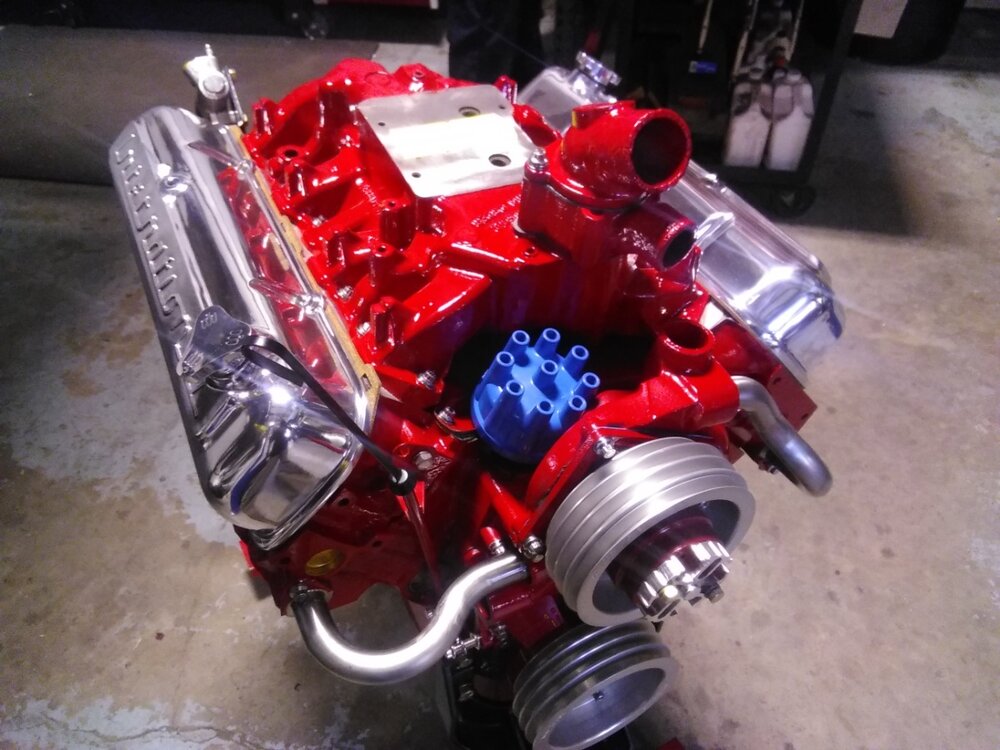
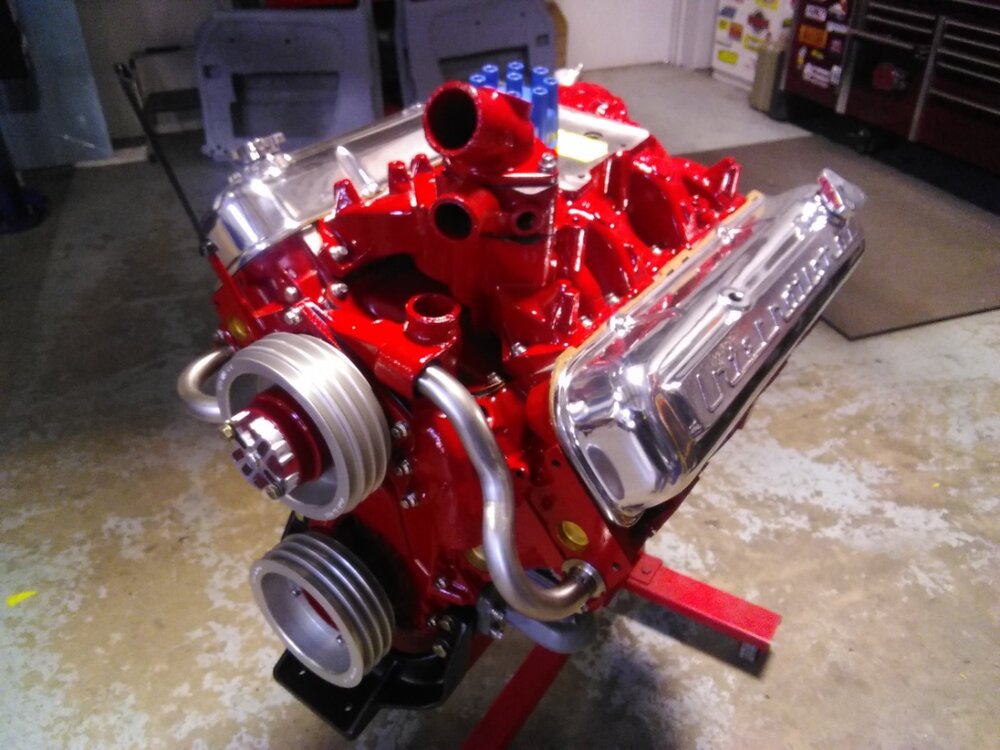
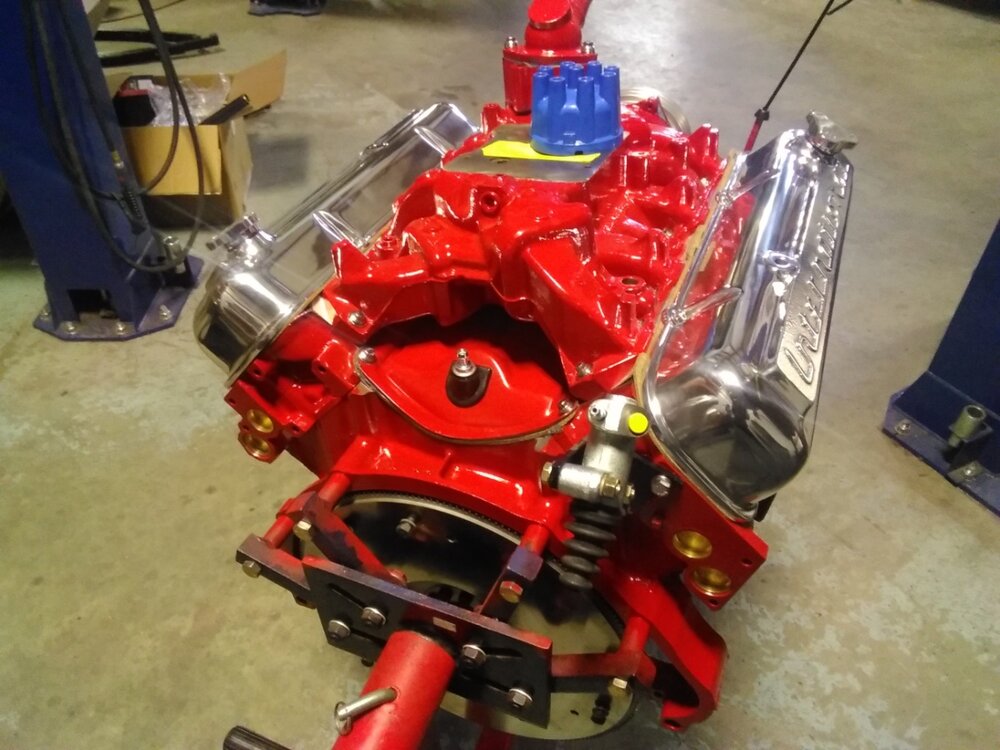
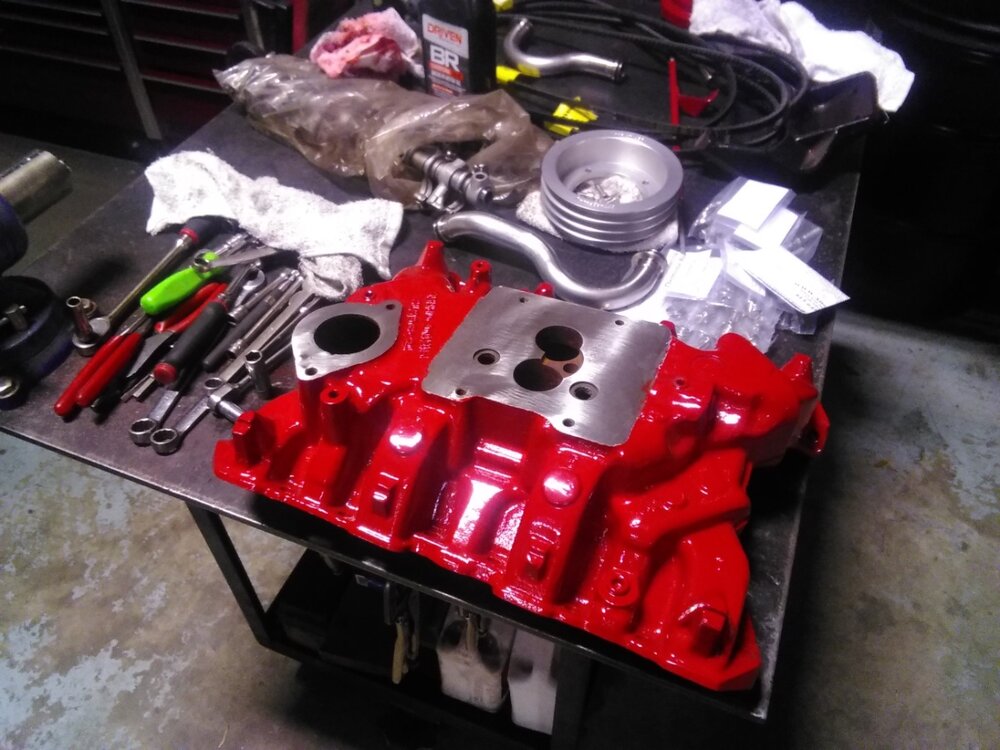
4/2/21 Engine was balance and final assembly . working on doors , window regulators , latches etc , window wing frames were removed for polishing , getting cab ready for paint. tony
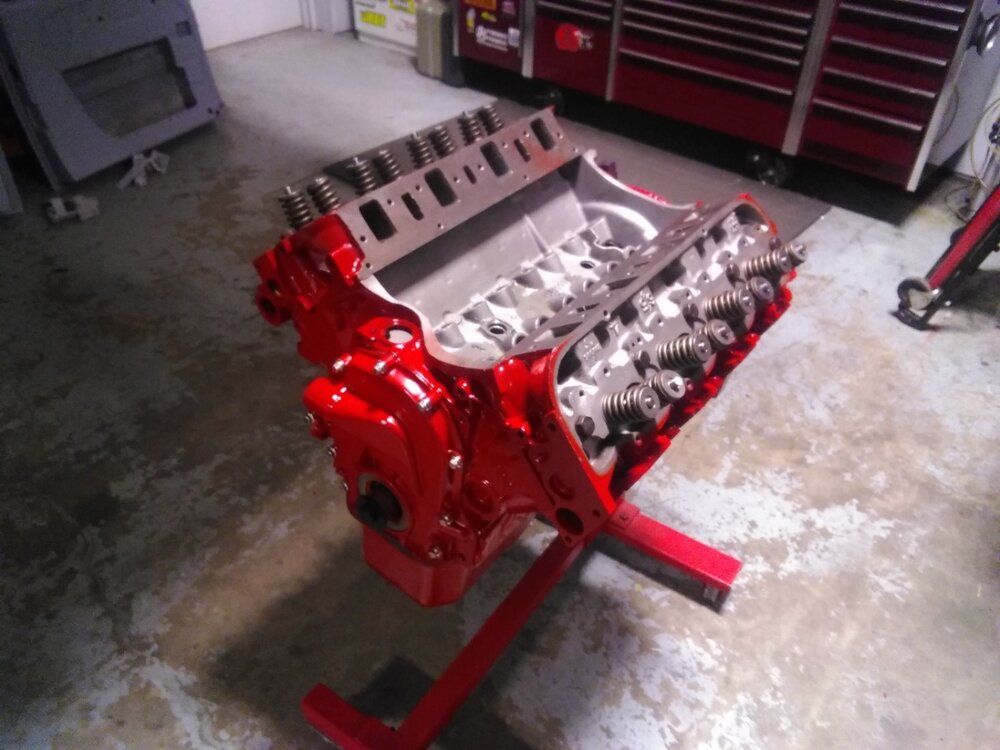
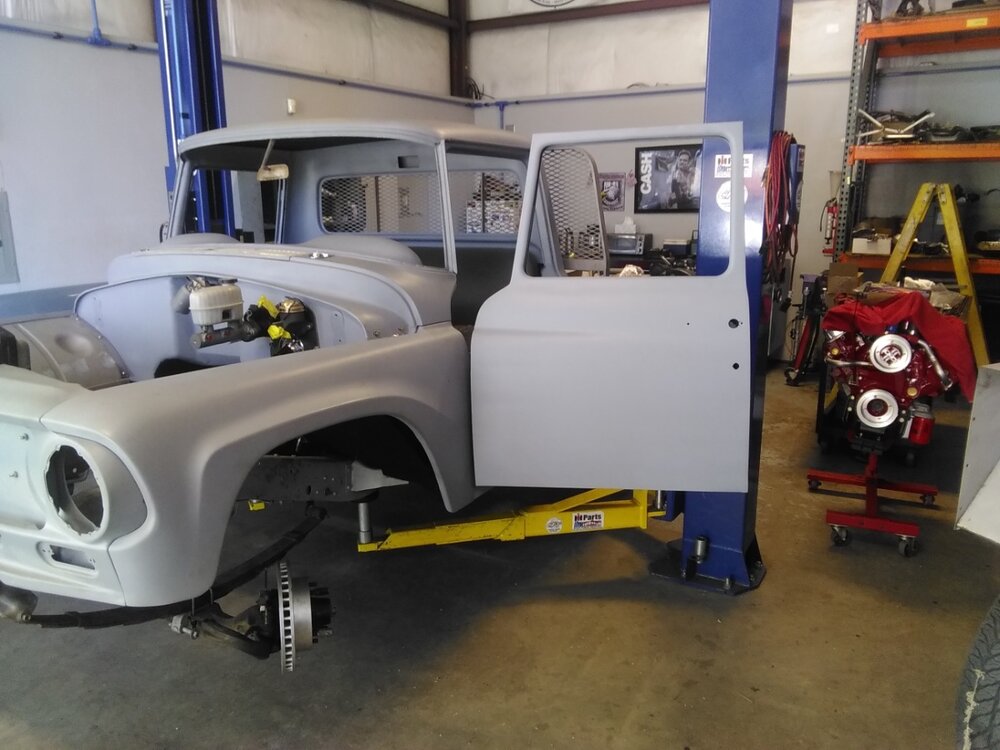
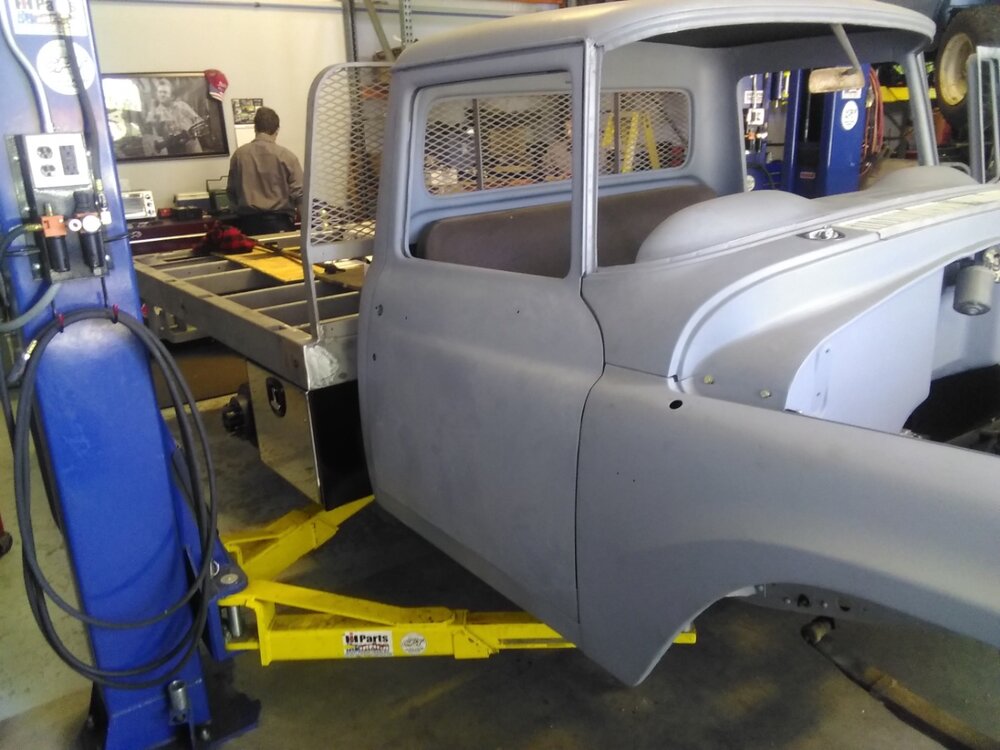
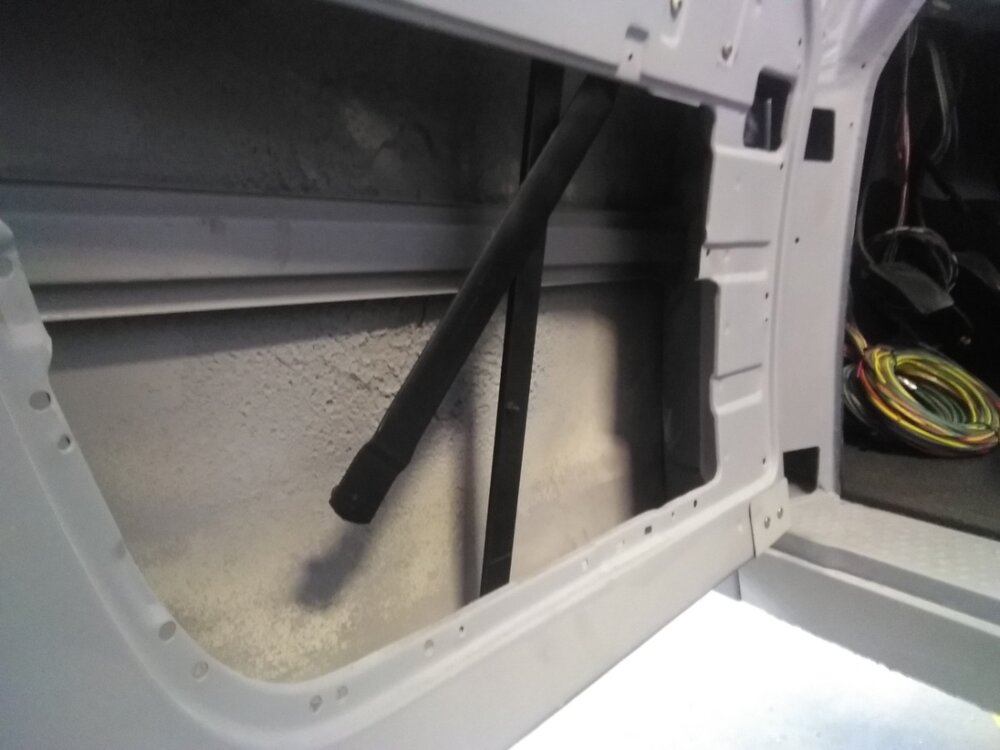
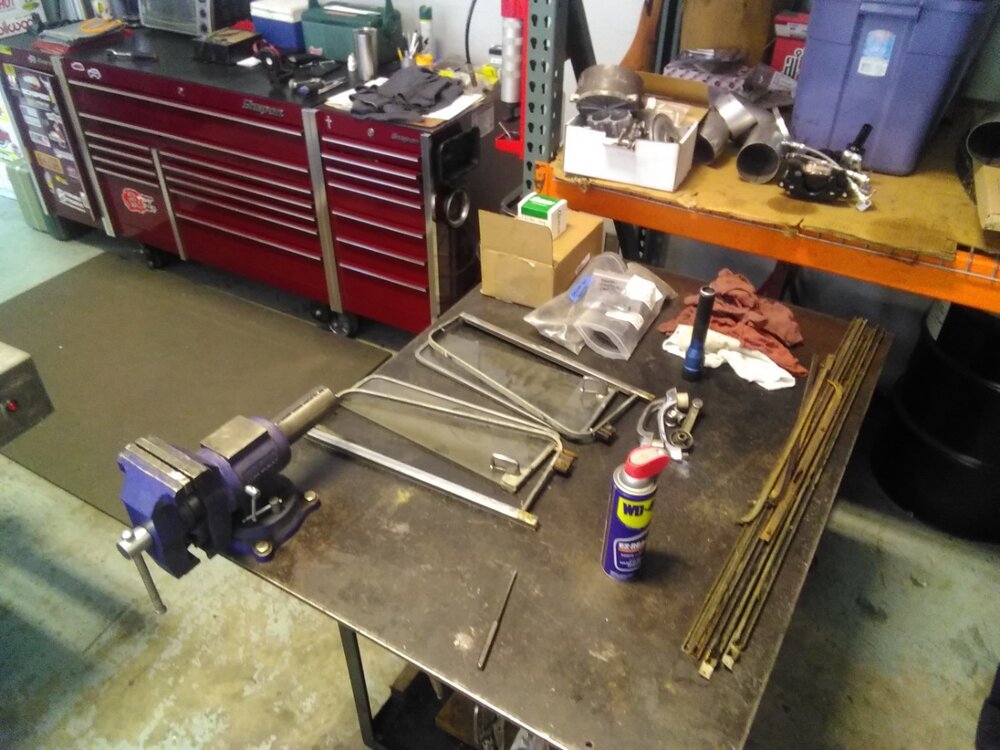
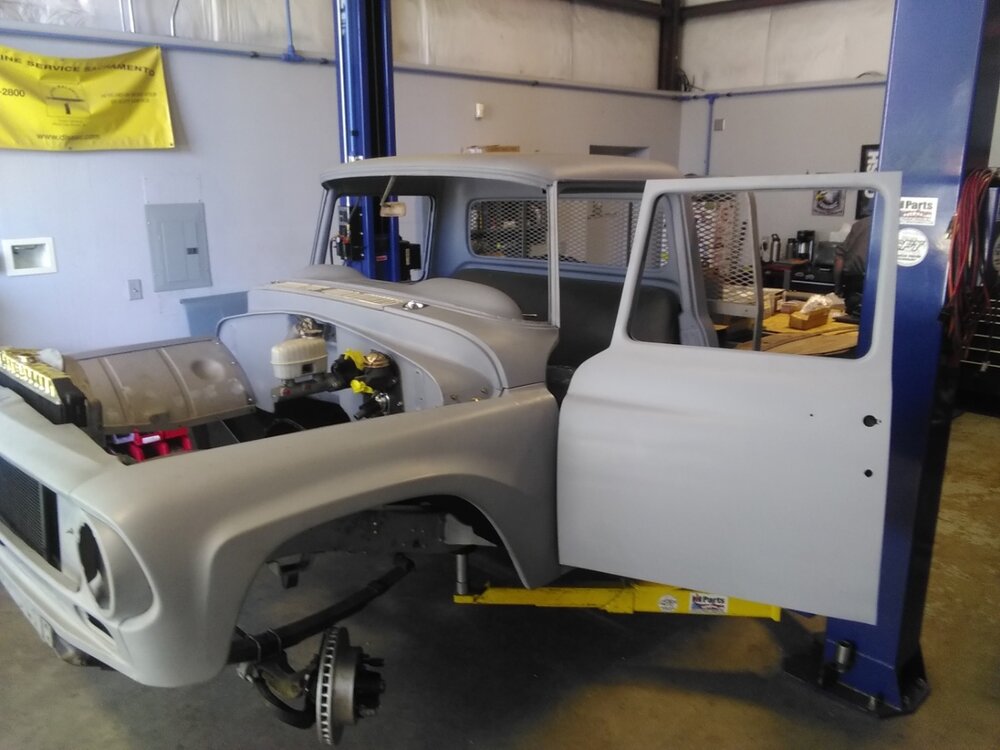 3 points
-
4/3/21 I had been dealing with some oil drips under machine coming from engine . I was reasonably sure it was coming from oil filter base but I also was sick thinking it could be oil pan which would require lifting engine. Yesterday drained oil changed out old base which was type with tube up center and replace from my newer donor engine the new style filter base that threads in center and no oil stick up center . this morning filled with oil and new style filter and ran it about half hour and thank God it ended all leaks ! I dodged the bullet of not having to raise engine . Finally a great lucky break . Lol tony
 2 points
-
2 points
-
Farm has one factory open gear, one factory was cab hydro, brother has two factory open gears . We have two 706 between the farms gas and brothers 282 that we will put on also. I want a spare or I will need for something else again2 points
-
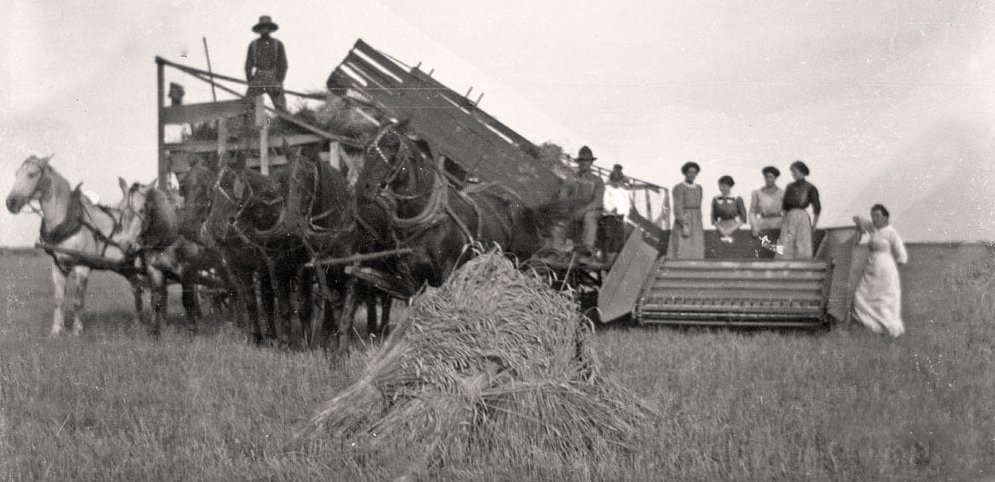
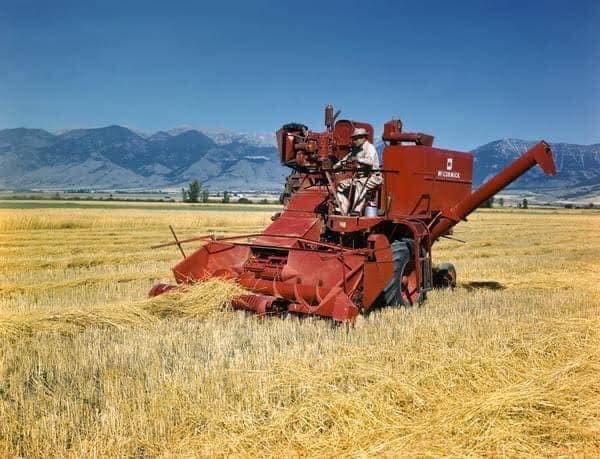
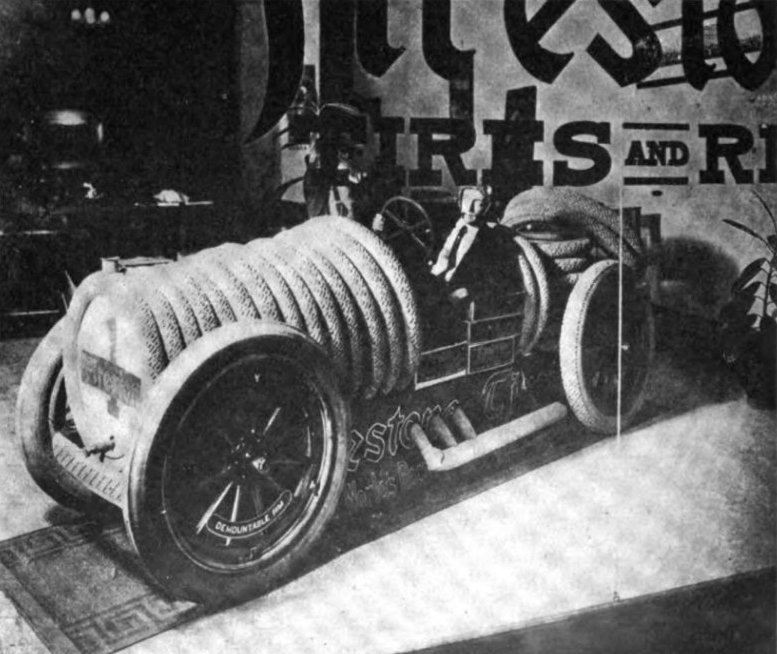
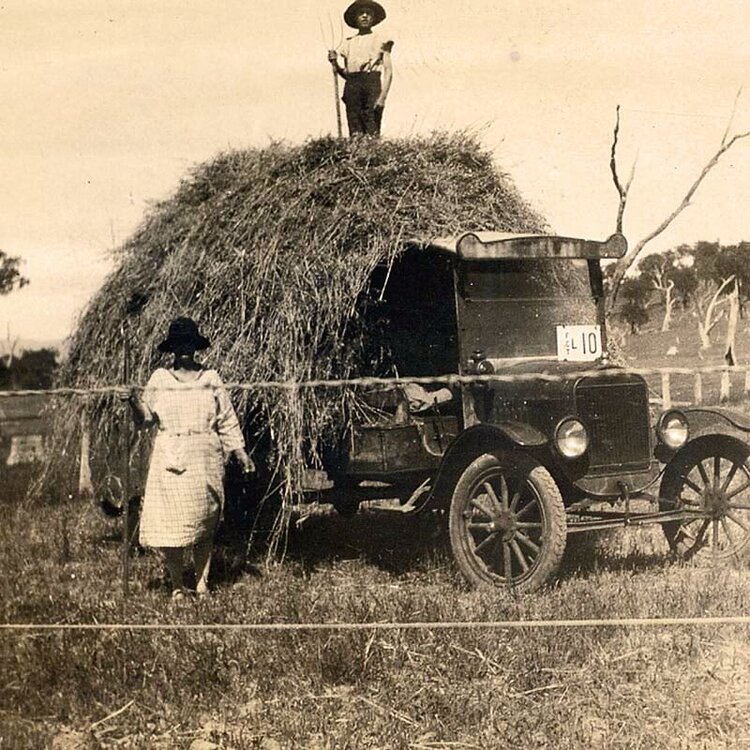
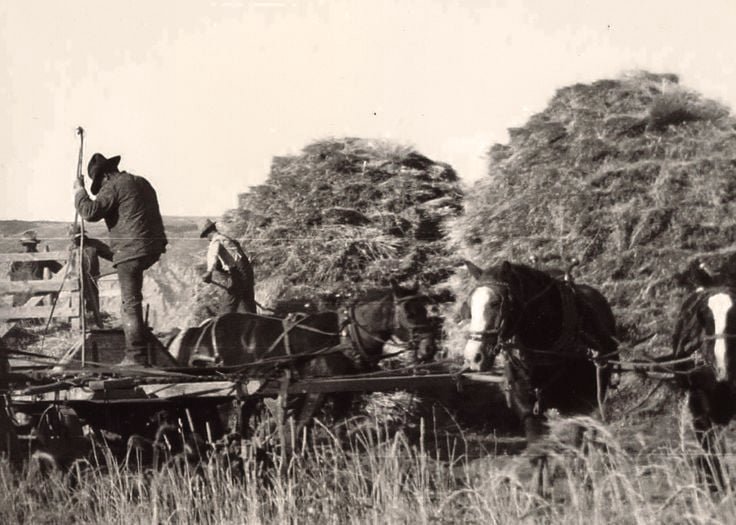
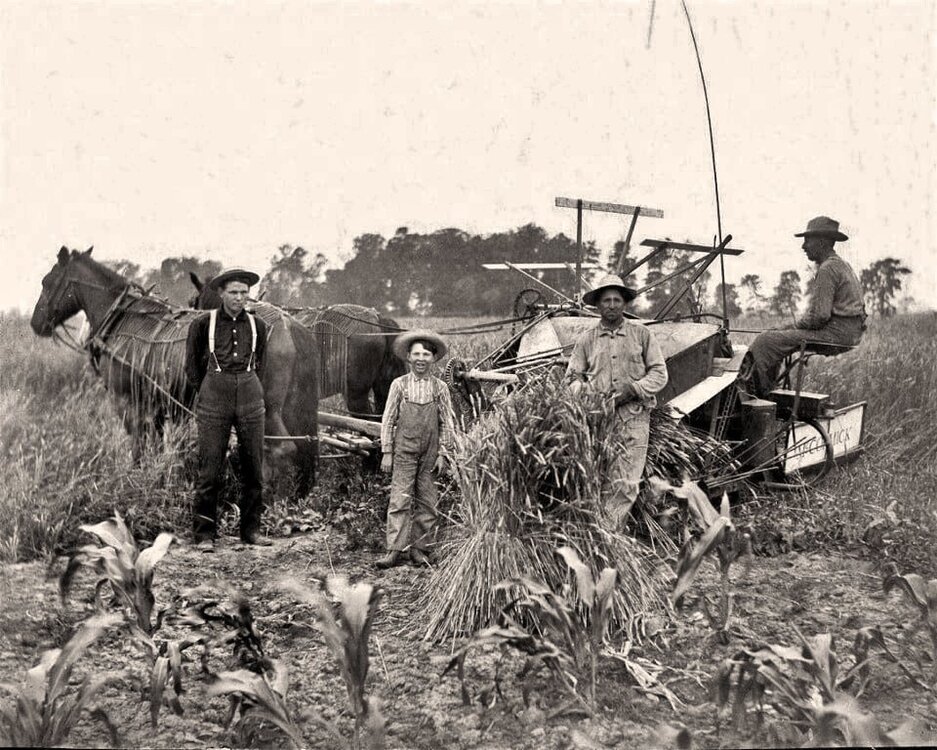
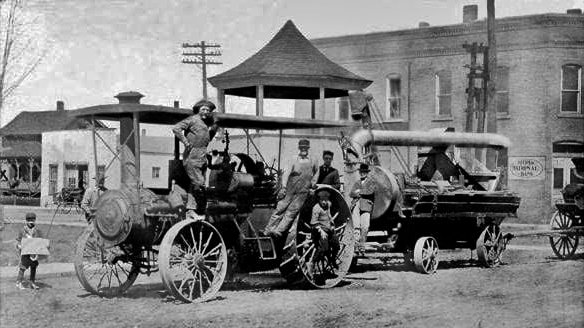
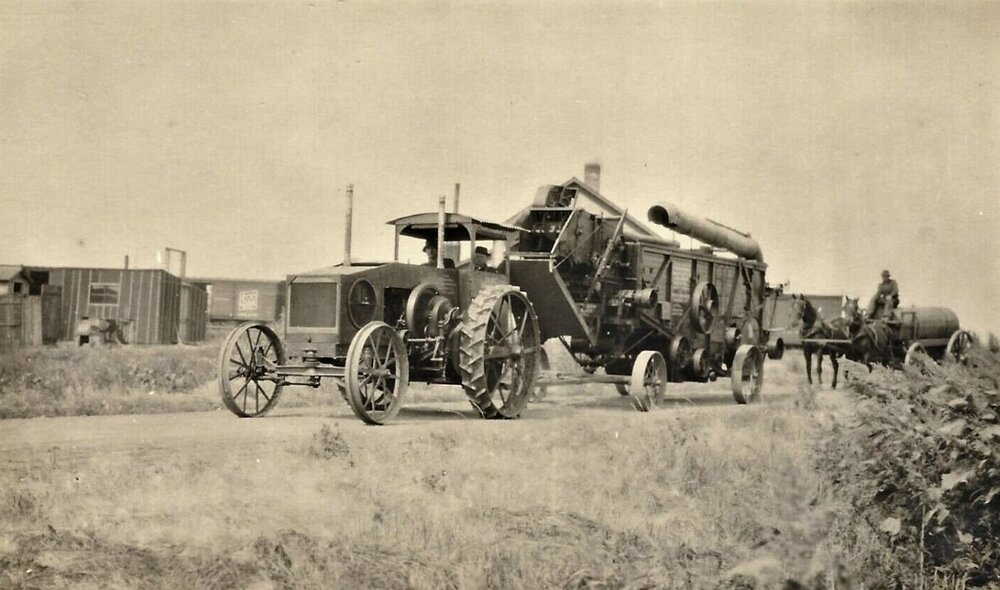
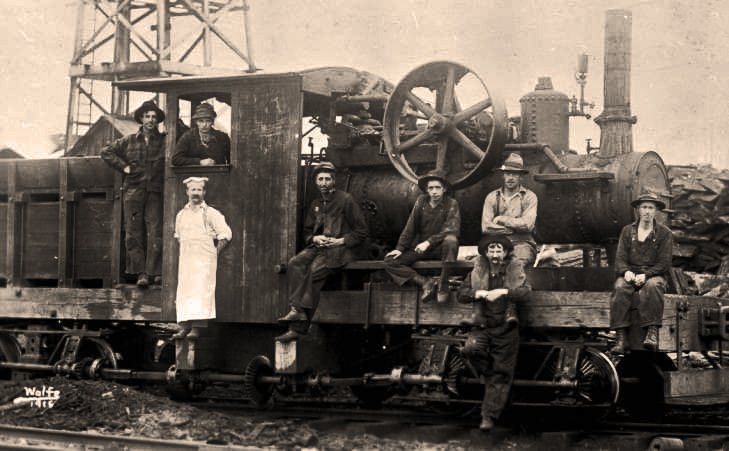
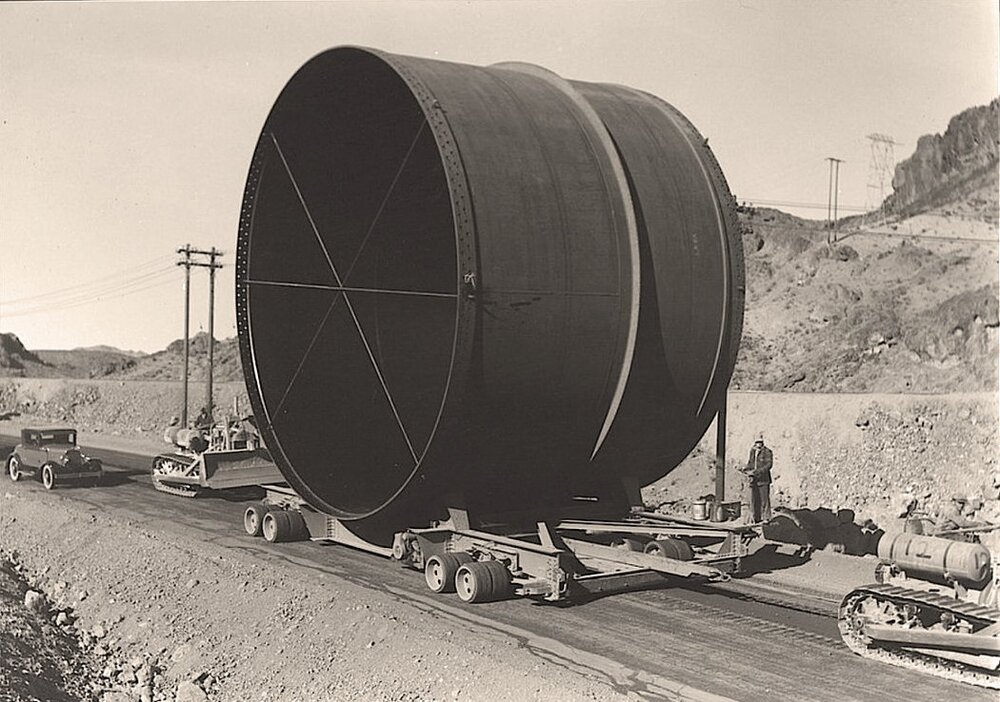
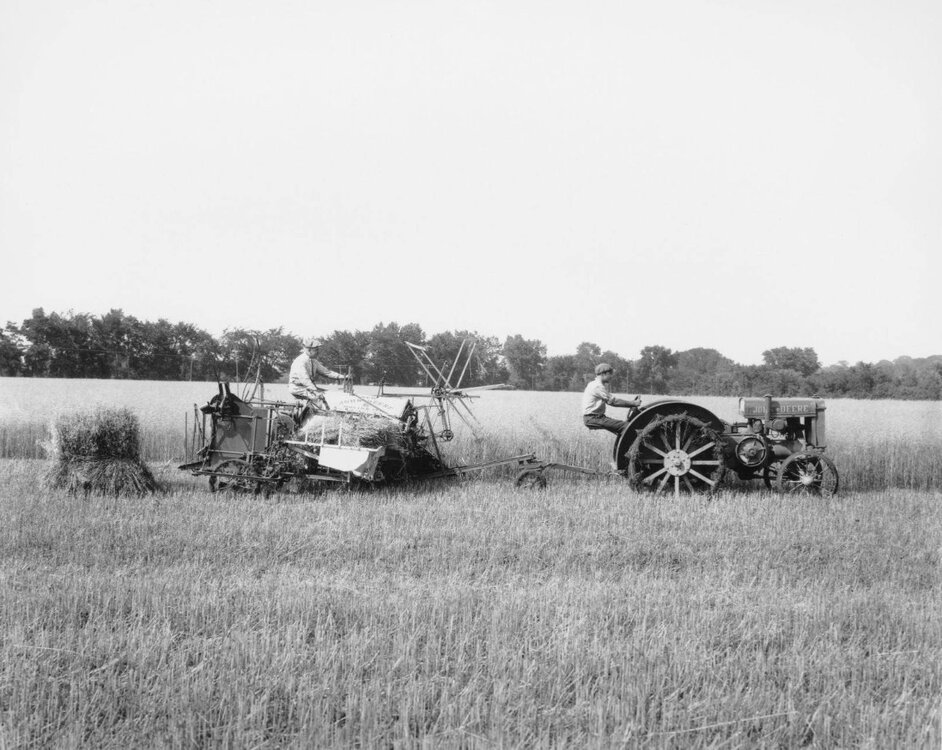
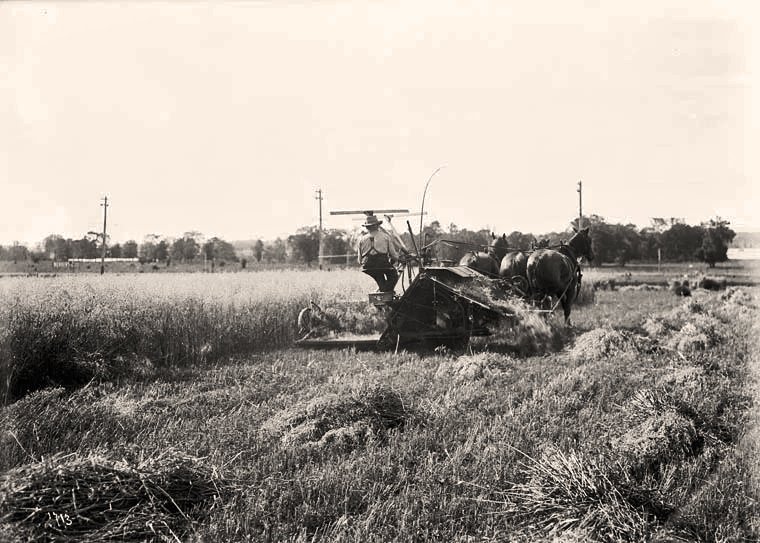
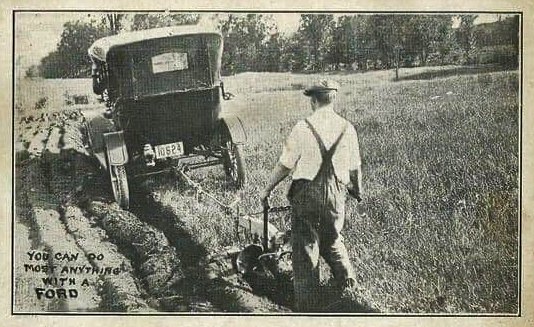
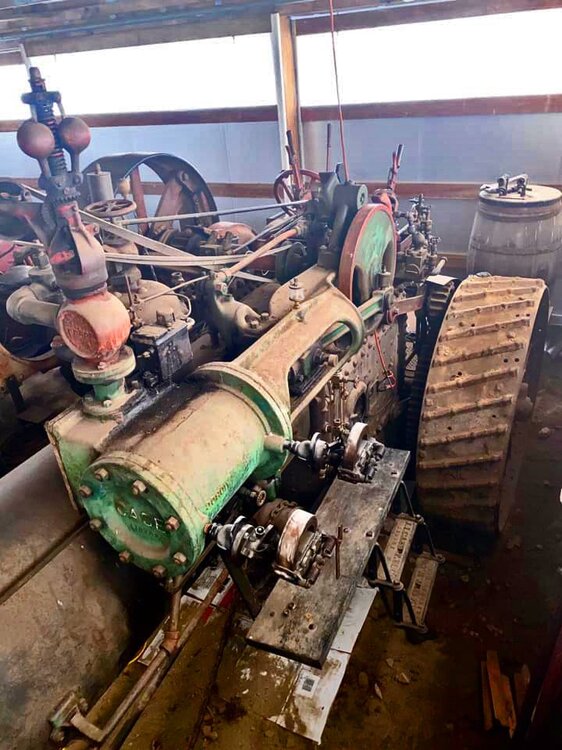
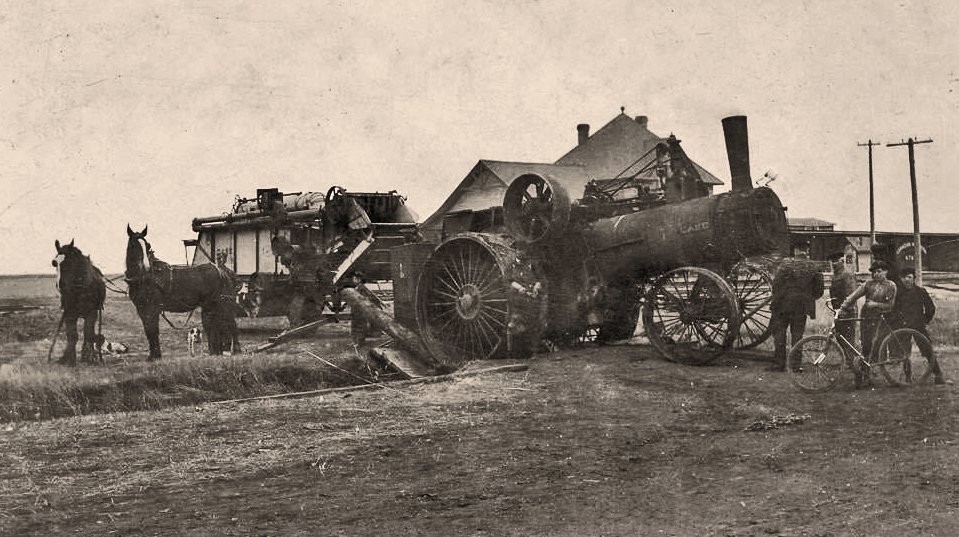
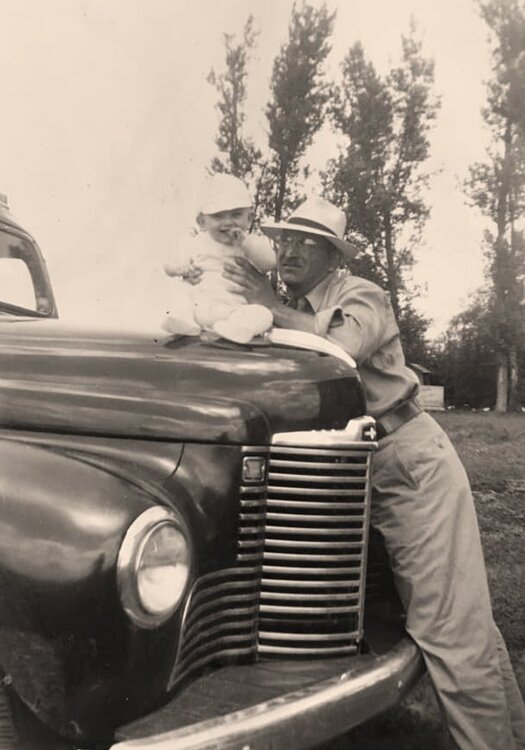
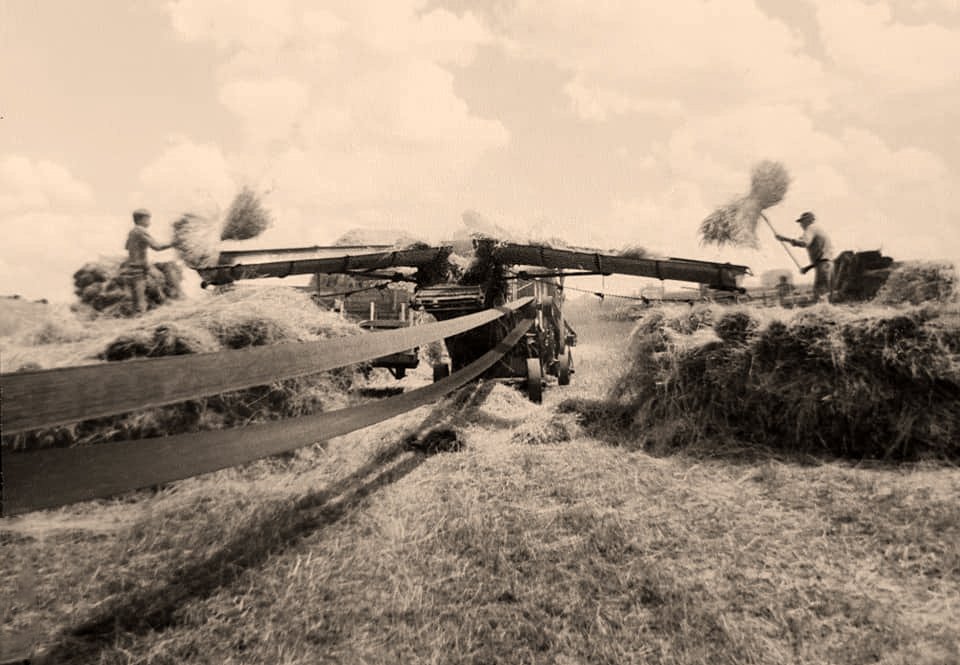
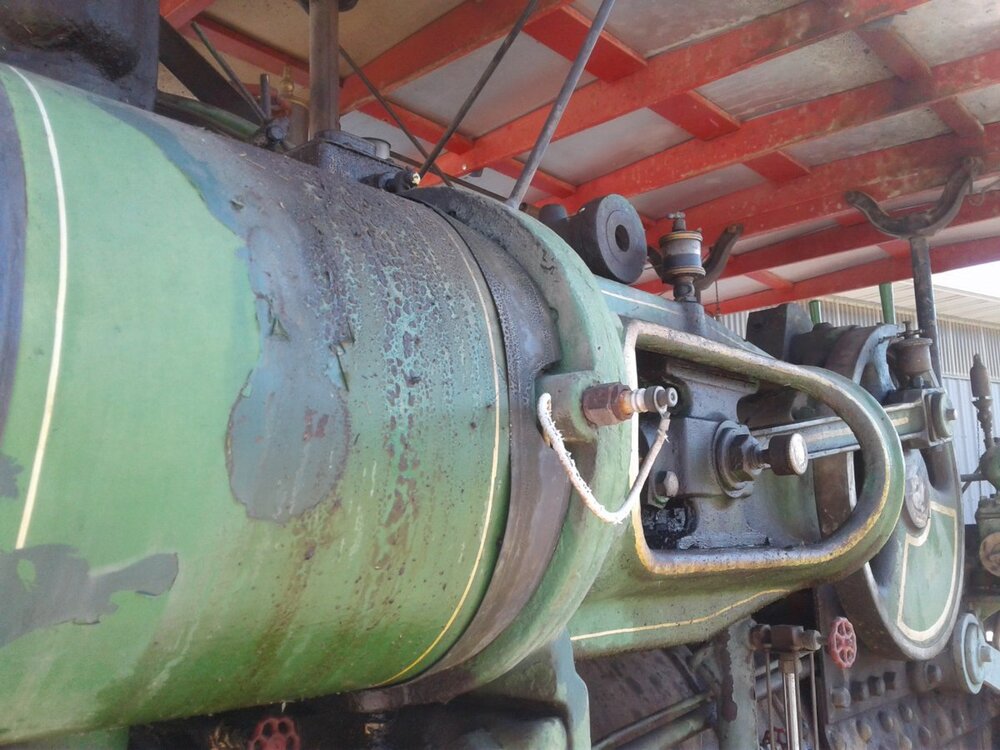
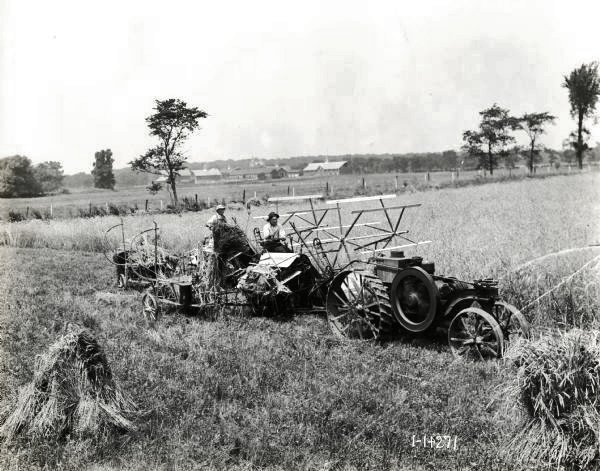
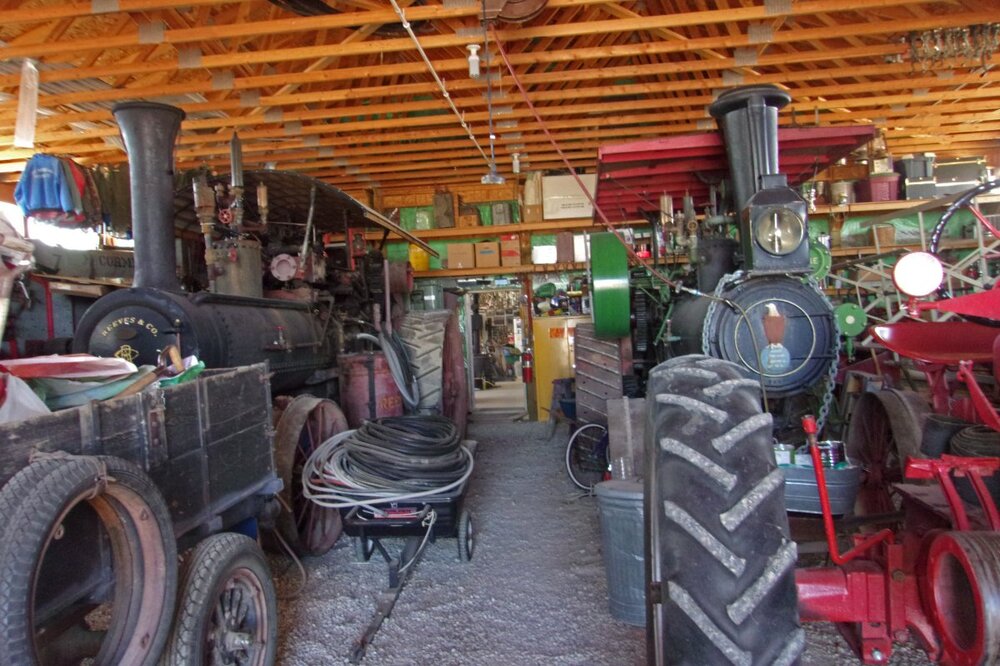
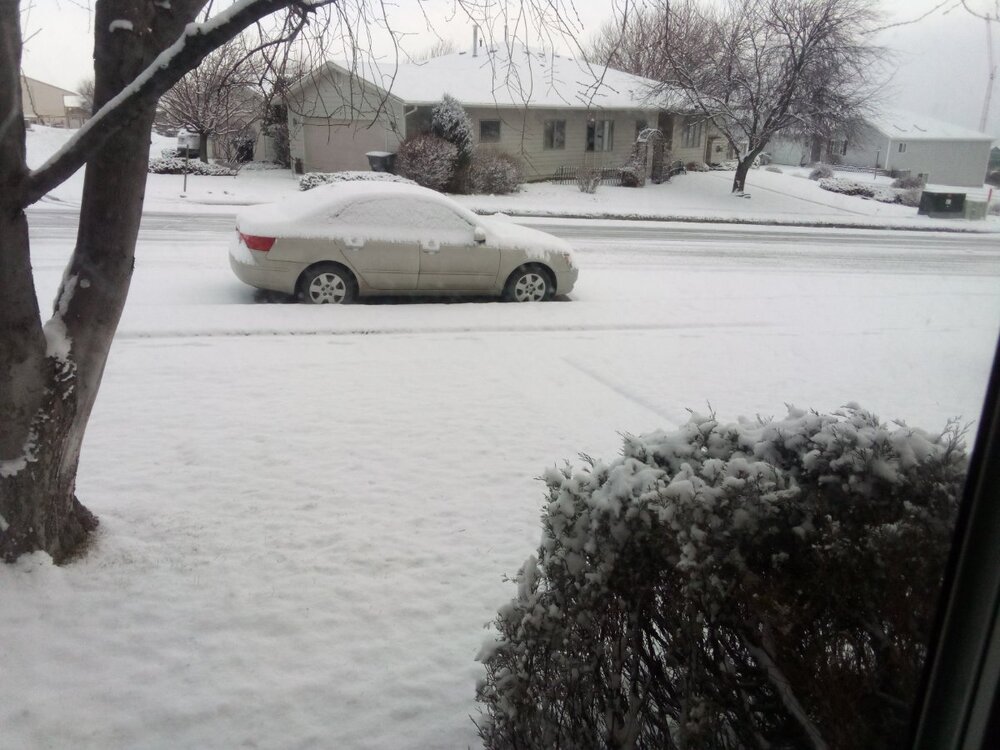
Roger, I'm wondering if this guy has figured out how to get oxygen out of his water and make hydrogen, to fire his Case steam engine? Our Case is a "hybrid" using steam and hydrogen, only with just one spark plug, it sounds like a John Deere tractor running. Here's a 110 hp Case that has more problems than poor spark. It's fallen down on the rear hitch frame that holds the water Tank. It has little to do with "110 hp" I think but here's a 110 hp Best engine that fell through a little bridge. Here's a horse pulled shock (stook in Canada) or bundle loader at work during harvest. I took this photo of the Tyler's shock loader near Moore (Eddies Corner), Montana in the 1950s. I remember Dad saying, "We had one of them too." This is a McCormick Binder being pulled by horses and the younger generation is shocking. This is a 1924 John Deere "Spoker D" pulling (likely?) a John Deere binder with an "automatic shocker." The farmers preferred shocking by hand, so they could put the top bundle "cap" on the shock (stook in Canada). This 8-16 IHC Mogul is pulling 2 McCormick Binders with automatic shockers. (stookers in Canada) I still like photos of farmers binding with horses. Getting to stare at the south end of those horses headed north all day produced some extra-curricular noises as their hay and oats was being digested. I thought this was a neat photo of two men pitching bundles into a Case threshing machine's wing feeders. They're "stack threshing" too. This is a "carousel" horse power unit turning a threshing machine, stack threshing. Here's an 8-16 IHC Mogul tractor pulling something in corn country! I don't know what this machine is, unless it is for corn country, that this 15 hp M. Rumely steam engine is pulling? A Titan, I think, but I can't remember the nomenclature? Roger will "spit it out." EDIT: I SAID, ROGER WILL SPIT IT "OUT" AND HE DID. HE TOLD ME THIS IS A 12-25 IHC MOGUL, AN OPPOSED TWO CYLINDER TRACTOR. VERY RARE! Here are some black gentlemen making firewood with their F-20 IHC tractor. And Roger will know the horsepower of this Rumely Oilpull pulling a threshing machine too. And I thought this was a neat photo of a Model T Ford Touring car breaking sod with a walking plow. This is a farmer and his wife with their Model TT Ford hauling hay. Here is a father and son with his new 1947 IHC K-model pickup. I always thought the 650 McCormick International Diesel was one neat tractor. I need the help of you IH Combine aficionados. My Uncle Fritz had a 127 SP that had the engine up above. I used to combine with Uncle Bill's 141 IH when he went home to milk cows. This engine and gas tank above combine has this 'old binder guy' confused. Farmers aren't the only ones who can cobble, or conjoin equipment to keep it going. These loggers have mounted a Buffalo Pitts steam traction engine aboard a Shay steam locomotive. Aren't short pipes called "nipples"? This nipple was going into Boulder, and later renamed Hoover Dam. Those Caterpillars shouldn't have much trouble delivering it? This is a Firestone Tire display someone put together at their tire shop years ago. I took this photo Thursday at Silver Creek. There is an IH Farmall M in the photo (An IH Tractor on a Montana Farm), with the Reeves and Case steam engines. I'm getting itchy to pull them outside again, but we can't get in too much of a hurry here in Montana. This was out our kitchen window March 30th! Gary?
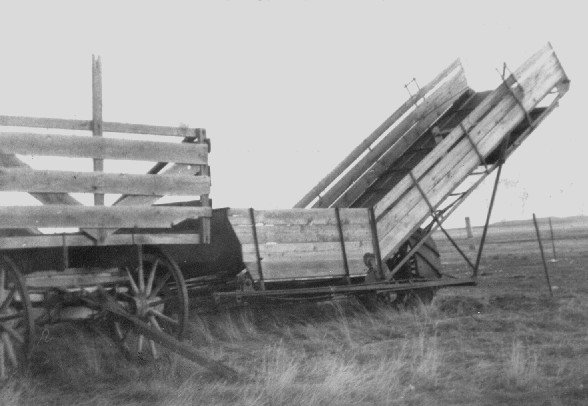
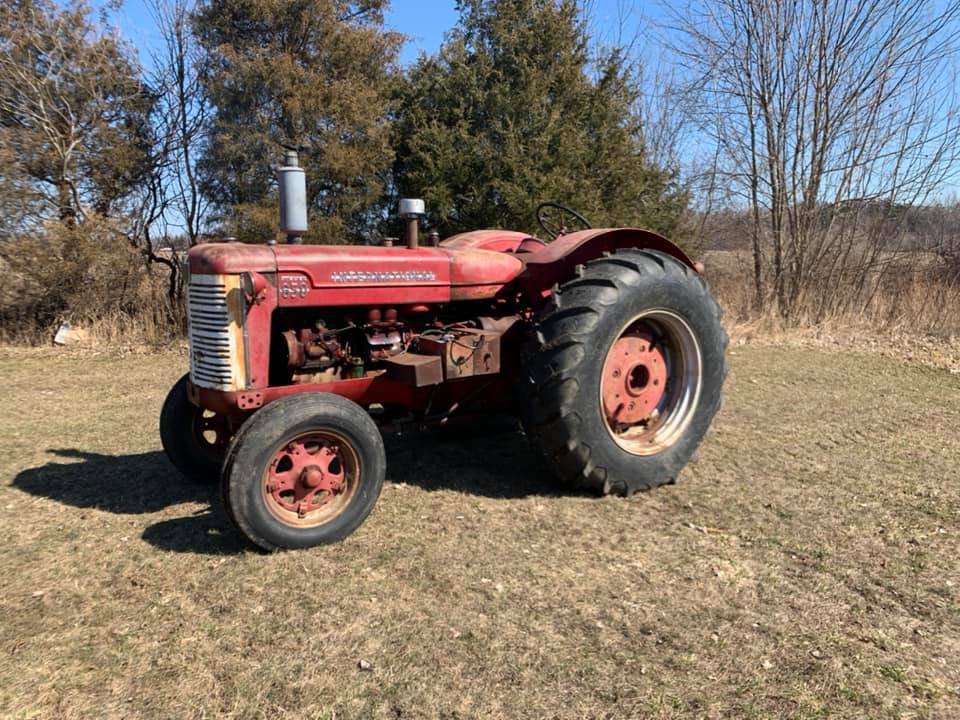
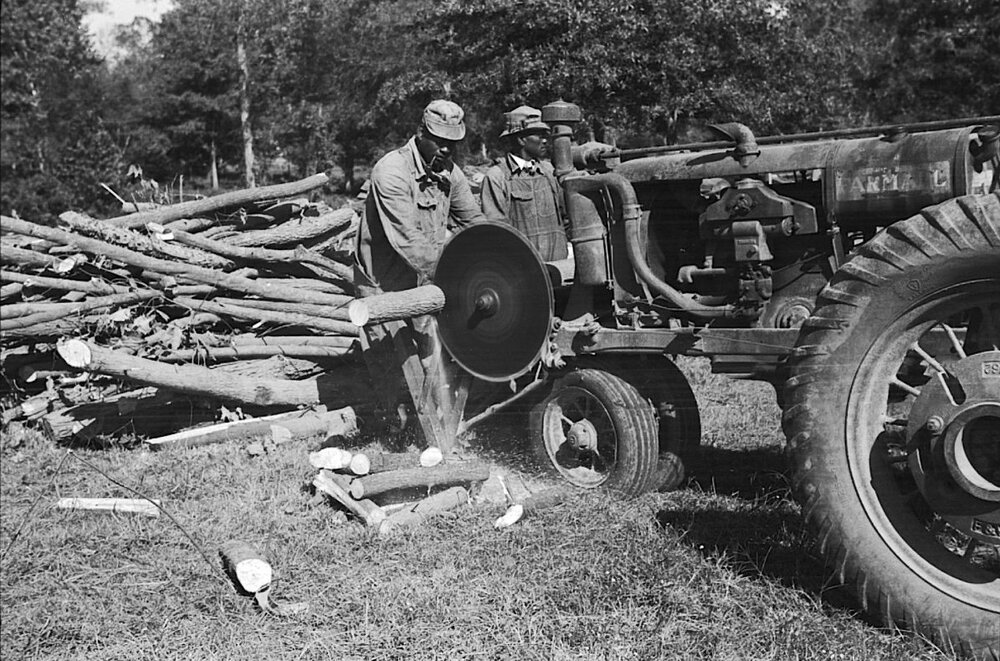
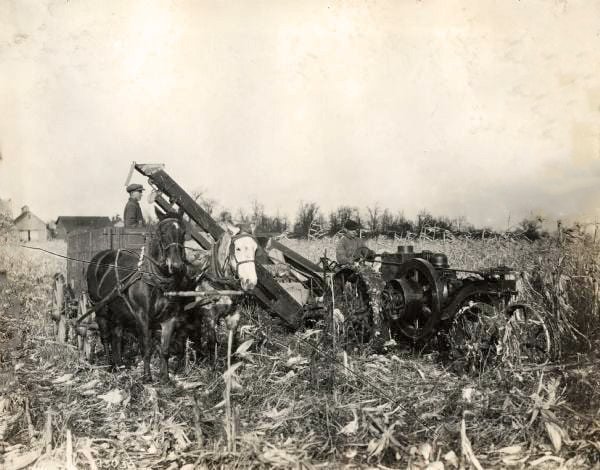


 2 points
-
Nichols and Shepherd occasionally comes up in this thread. I was out in the pasture yesterday and shot some video on and around the old Red River Special while checking on the cattle and the grass..2 points
-
Track torch is borrowed from my cousin. 75 85 , and 95 xt machines. 75 is actually gone now. They handle it fine . Bending the steel I have two benders I made for the press . I want to make a horizontal bending machine similar to this type of thing ......1 point
-
I bent them last night and I got sidetracked by other things
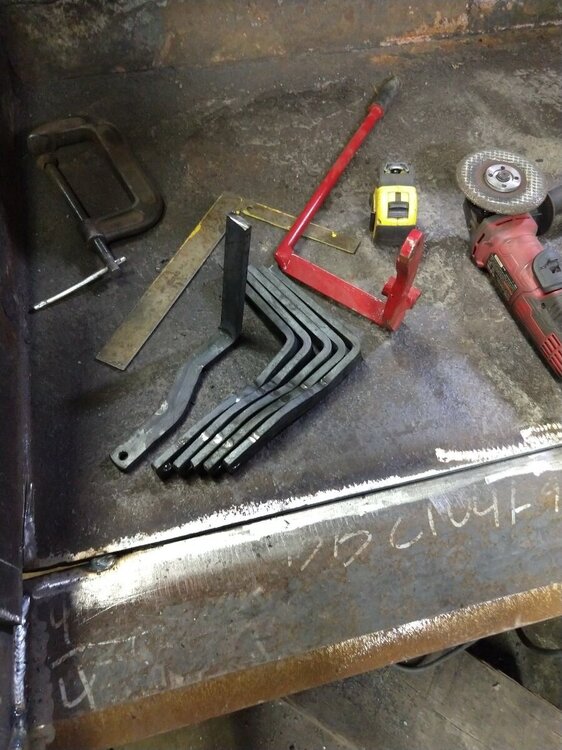 1 point
-
BTW this a 392 engine but we are planning on leaving it on LP as truck has been it’s entire life , the original engine we replaced with this 392 was a 304 . tony1 point
-
Found a set that are still attached to an original two post and canopy .Got to get some shipping from Pa to Tenn

 1 point
-
They bent , not perfectly but hopefully will work
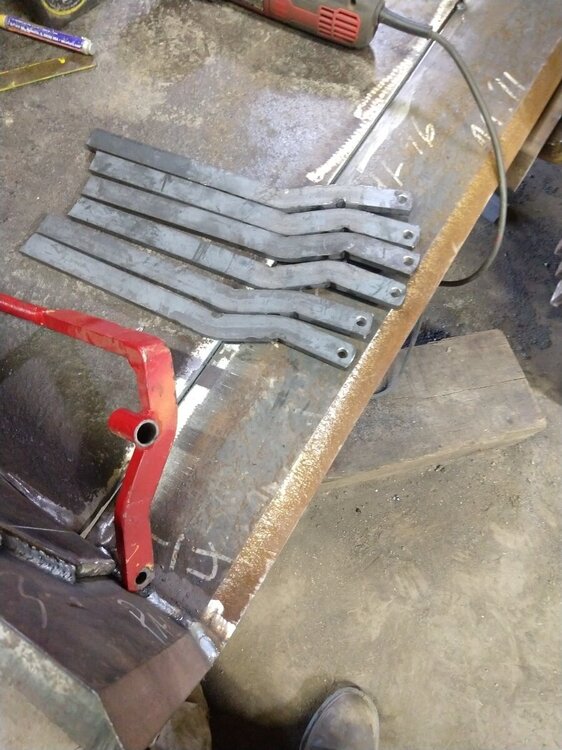 1 point
-
Anson, Not to my knowledge? Some steamers were put through the paces up in Winnipeg, but more or less a select few. Gary?1 point
-
Did any of the Steamers ever get run through the Nebraska tests?? If I ever make it out to Nebraska----the tractor test lab would be on my list to visit. DD1 point
-
Anson, Roger may disagree, but I think the engines sizes increased in bulk, and the horsepower pretty much followed along. The smallest traction engines built by a few companies, such as Nichols & Shepard, Russell, and Advance built tiny 6 horsepower engines. Case built a 6 hp traction engine before the turn of the century, but stopped about 1898. These companies must have felt a market for them? Eight hp, 10 hp, 12hp, 15 or 16 hp, 18 or 20 hp, 22 hp, 25 hp, 28 hp, 30 hp, 32 hp, 35 hp, and 40 hp made up the bulk of the companies lines built. Their bulk pretty much increased with their horsepower. It was the early method of designating horsepower of engines, but try to imagine what that number of workhorses would pull on plows. The horsepower I listed were Nominal horsepower. And for a "nominal fee" I'd attempt to explain that. That went pretty much standard until 1910. Case changed to "brake" horsepower in 1910. Case had been using Brake Horsepower on their famous 150 hp engine, they started building in 1904. I have records of the 150 hp engines built and the first ones were listed as 40 hp engines. So our 15 hp Case became a 45 hp case with some structural changes; larger front axles and hubs that wouldn't wear as fast. Their smoke boxes at the front of the engines were lengthened. Reeves also changed over to brake horsepower too. Mike's and Randy's 20 hp Reeves became a 60 hp. Dad's 32 hp Canadian Special became a 120 hp. Dad's engine was also a "cross compound" engine. It used the steam in the high pressure smaller cylinder, exhausted into a "receiver" then that used steam went into a low pressure, huge size piston and cylinder. The cooler and reduced pressure had as much effect on that larger piston as the high pressure steam had on the small high pressure piston. The sizes had to be computed to work out and some companies that built cross compound engines, didn't function as planned. I have operated a 30 hp Advance cross compound engine and it was very sluggish, having either too small of a high pressure piston and cylinder, OR, it had too large of a low pressure larger piston and cylinder. The cross compound purpose was to use two pistons and cylinders, but use less steam, which computes to less water up the smokestack and less coal or fuel to heat that water. Most any increase in brake horsepower over its former brake horsepower was often accomplished by boosting steam pressure 10, 15 or 25 psi. Some engines used more weight to increase its pull. Some increased steam operating pressure, while some boilers couldn't keep up with the engine's (Motor's) use of steam. So there were mechanical engineering differences that didn't work as well. I'm sitting here waving my hands like my quarter Italian tells me to, but I could go on and on, speculating about certain engines and the manner in which they "manufacture" horsepower in a steam engine. I hope you got something out of this, Anson? Some engines were near perfect. Others were oversize paper weights. Gary???1 point
-
I think I probably asked this question years ago. The physical size of any of those steam tractor always amazes me. How close did the "lbs drawbar pull" match up to the various weights???? Just thinking about the efficiency of transferring steam power to the ground------did any one brand have a reputation of creating more drawbar pull than other brands of similar size??? I would think everything started out with basic straight gearing and then improvements started. Whooooooo------whoooo-----whoooo!!!!! DD1 point
-
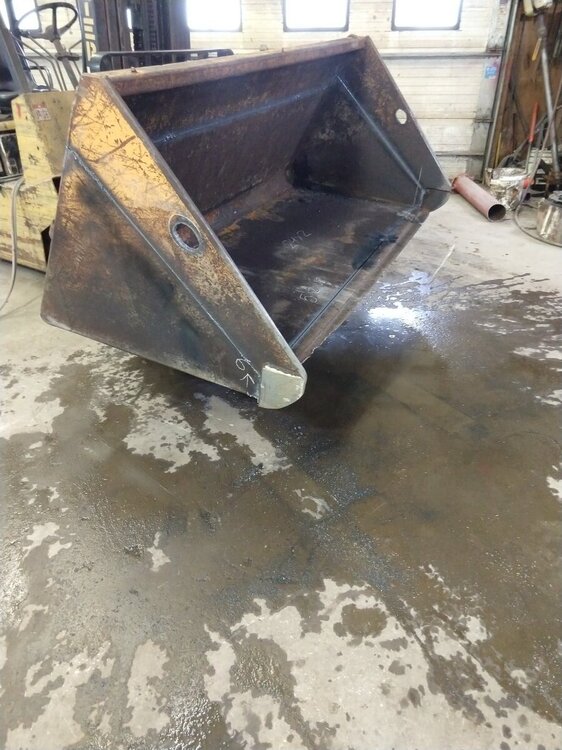
Doing something really uncommon here . I am reducing the size of one of our manure buckets. It hasn't been used much in the past 6 months. It is 7' wide . I shortened the top 9" and the cutting edge around 2" . We made this new in December of 2013 out of 1/2" AR plate
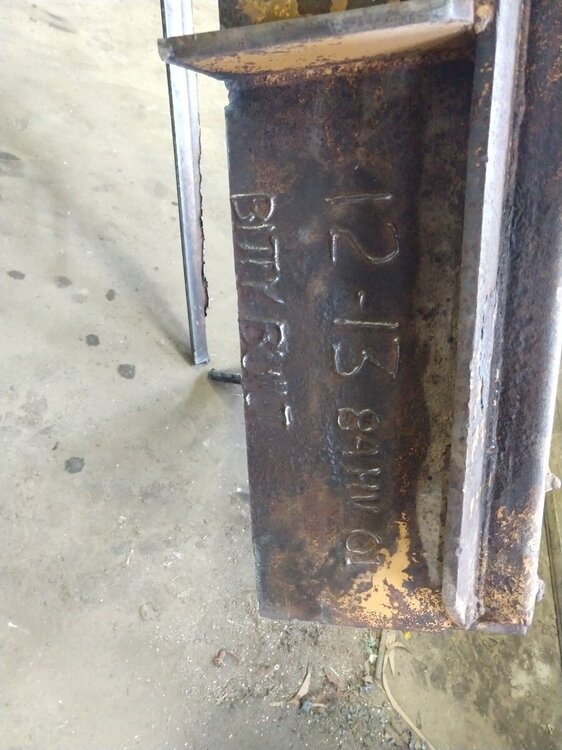
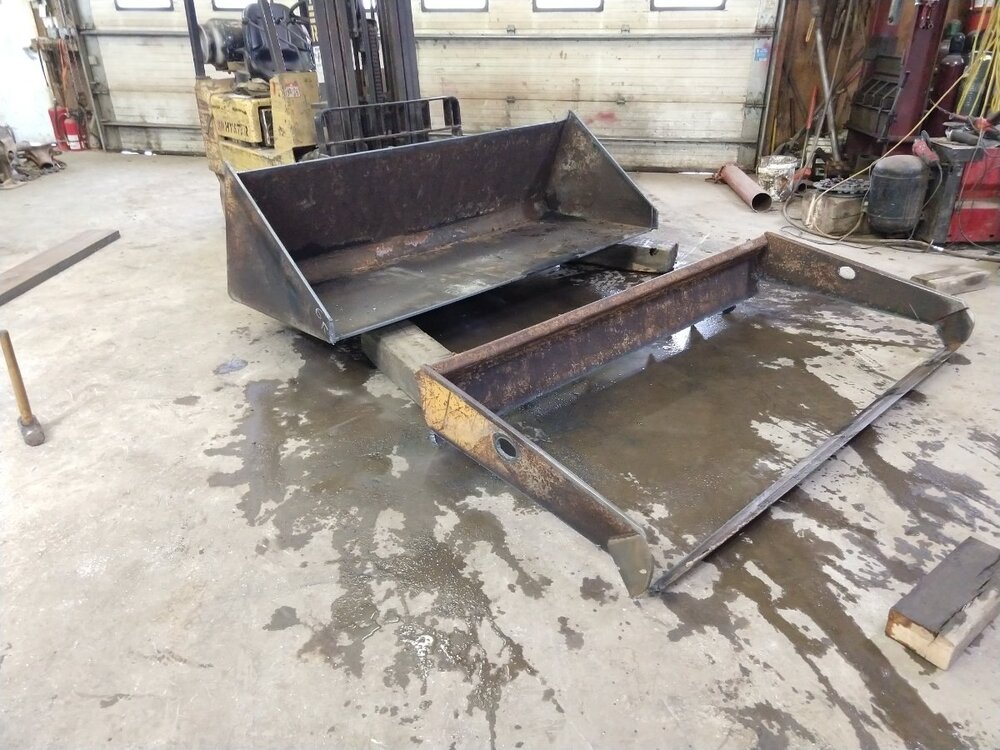
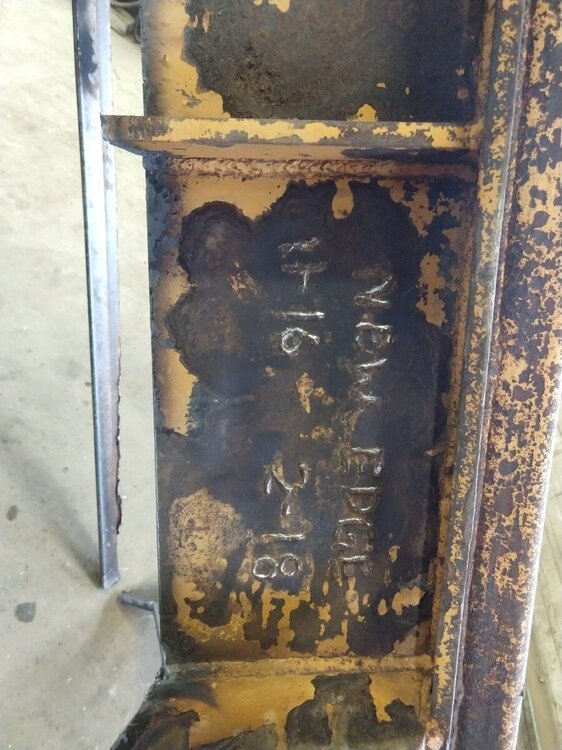
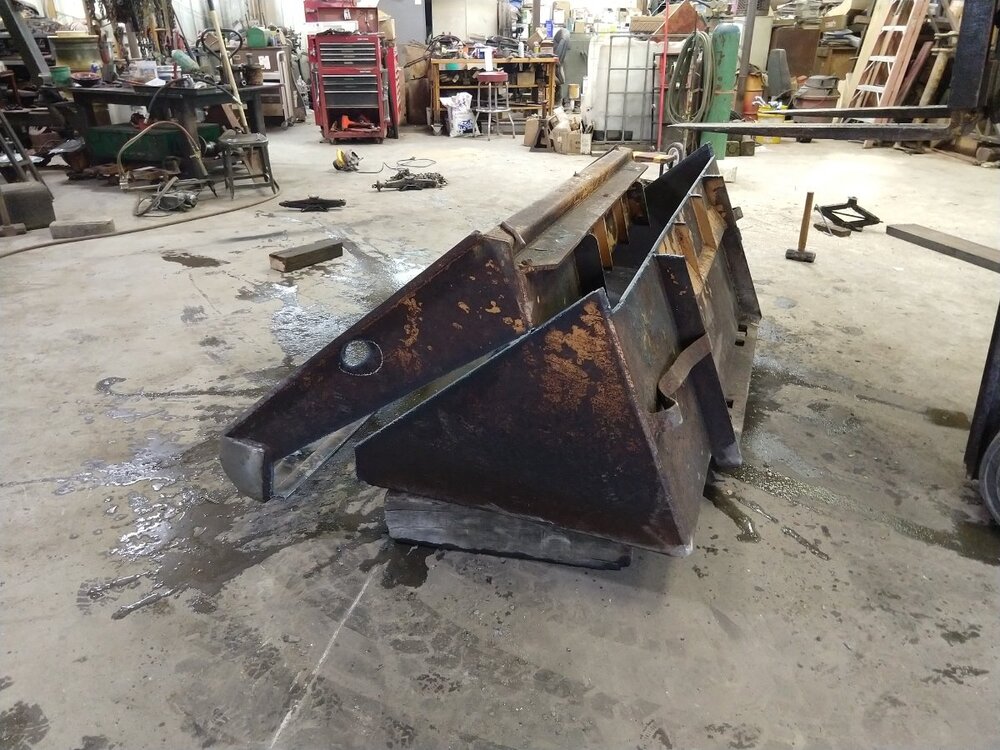
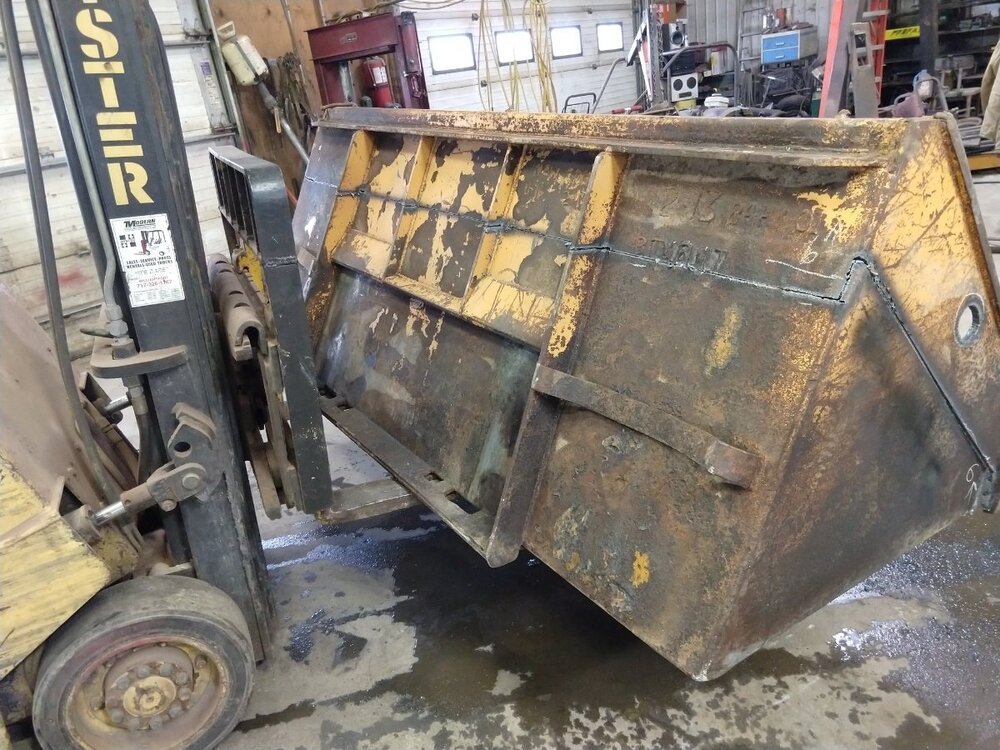
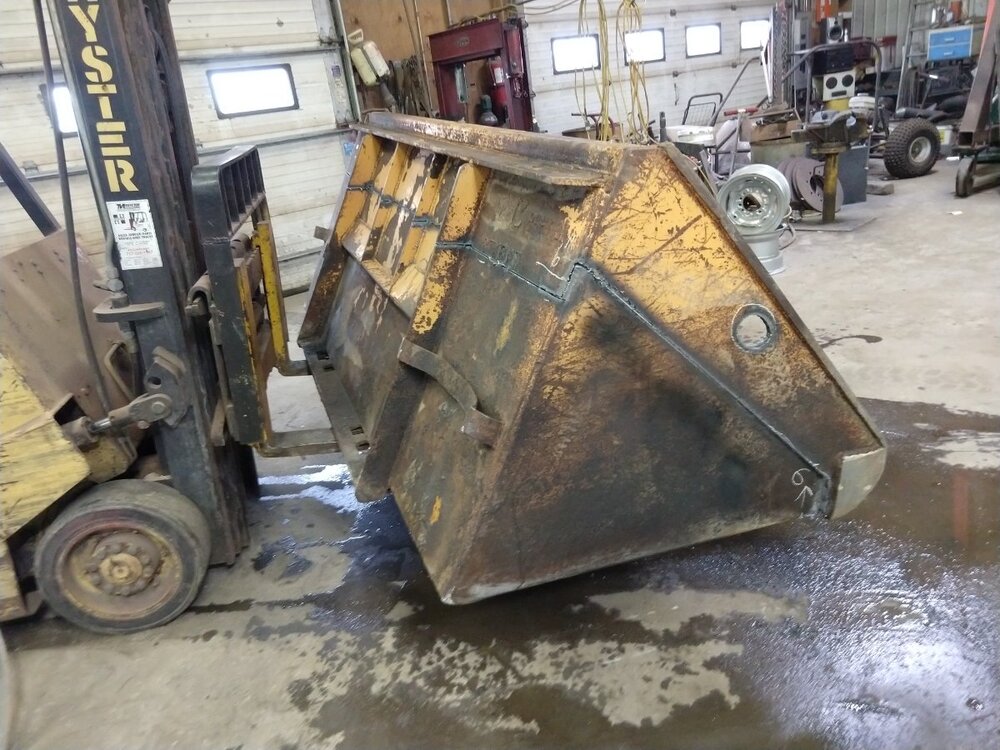
 1 point
-
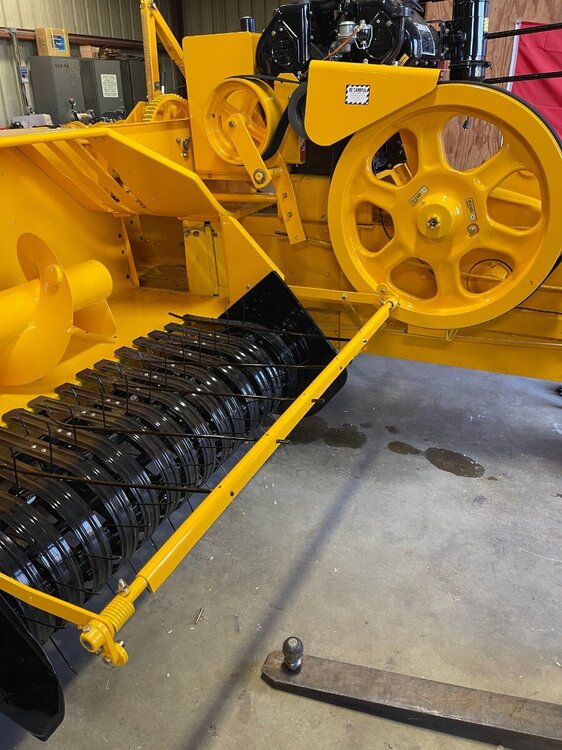
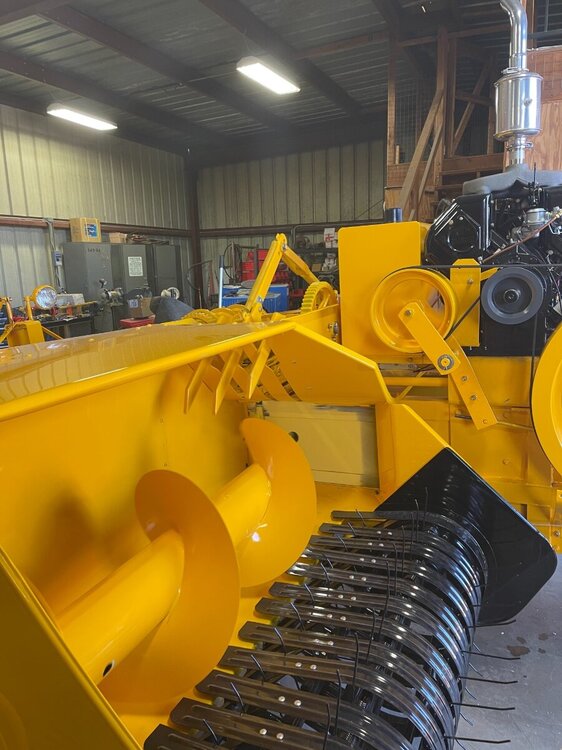
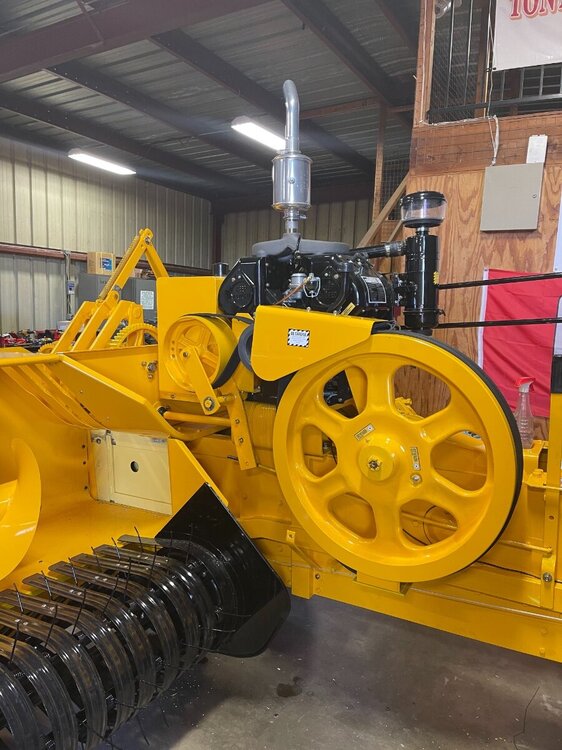
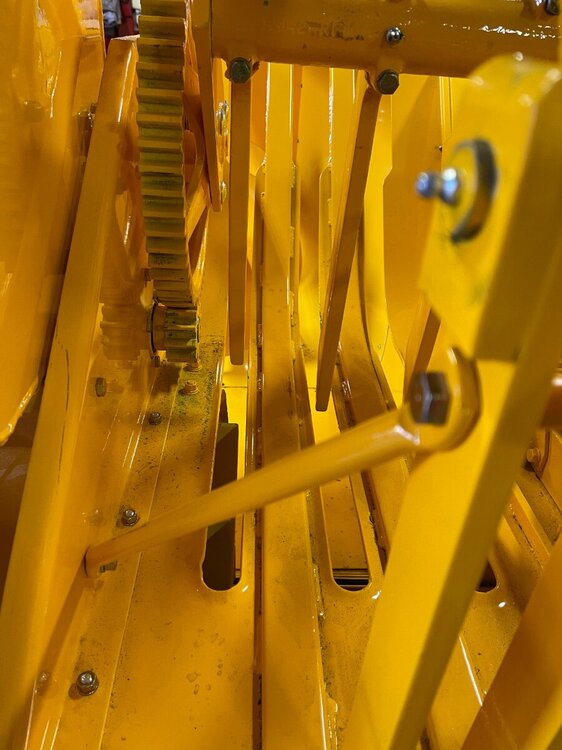
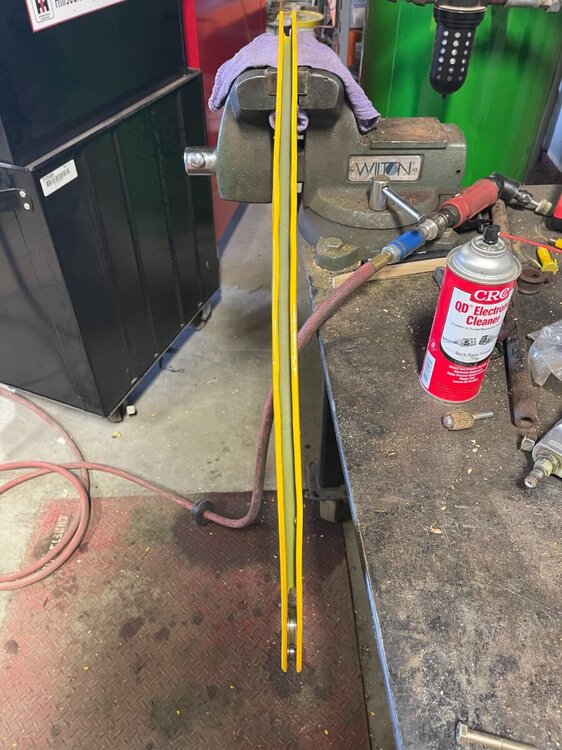
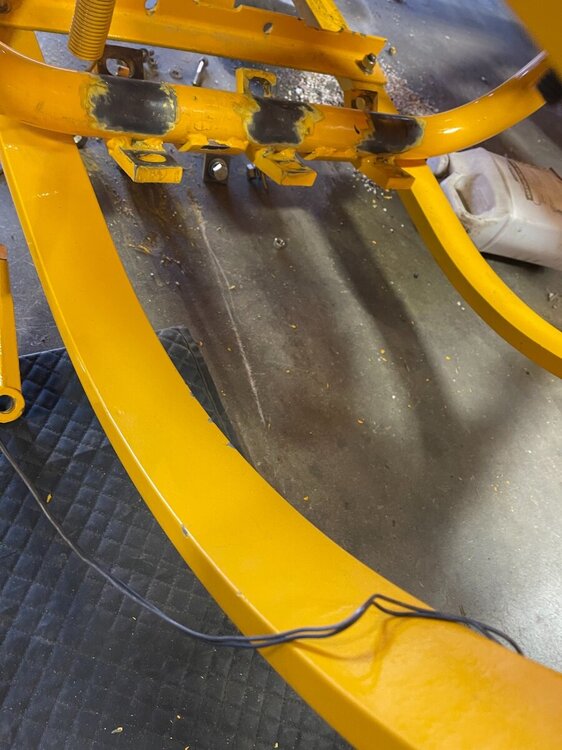
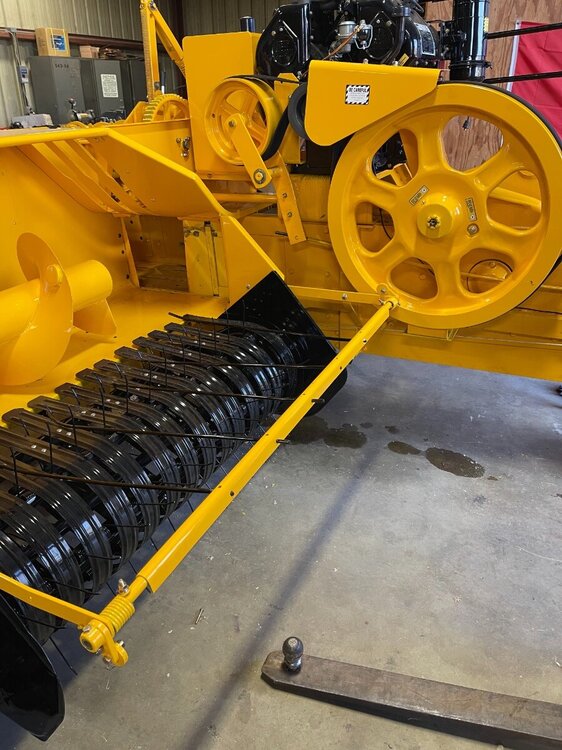
3/31/21 was hoping to have great needle news but another minor set back . I was fat, dumb , and sassy thinking I had two sets of three needles. One set was perfect never been hurt and the other set were bent but I had sent them out for straighten and looked perfect next to sound set . Well, while putting new wire rollers on tips of good set , I notice a wire groove wore into needle . How I never saw this before is beyond me . , all thee good ones had the groove wore into their back body , so decide to go with second set! Well!, even though they look perfect , no way can we shim them up to where they need to be , every which way , they are sprung and lost their rigidity , original set sets perfect , so ,needles back to welding shop so a guy that knows what he is doing can lay a smooth hard metal bead and fill the grooves . the pic of needle here,is the re straighten one ,it has no groove but you can see where welder needs to lay bead , two inches into that Valley and groove is about 12 inches long on each needle. Original needles are already heading to welder, forgot to get a pic . On the bright side , I have feeder fork timed and operating. From last post patients and gentle persuasion got pinion in ! Have drive belt adjusted and shield and guide on and have the , pickup cover rods on , ( that what book calls them ). Last pic . So now waiting on pulley brake and needles. These restorations are a Hurry up and Wait process ! Needing to get to fine tuning and twisting process the suspense is getting to me . Lol lol. BTW the ugly paint scraping on needle tie cradle was Done on purpose so clamps can be metal to metal , we'll touch up later .lol lol tony
 1 point
-
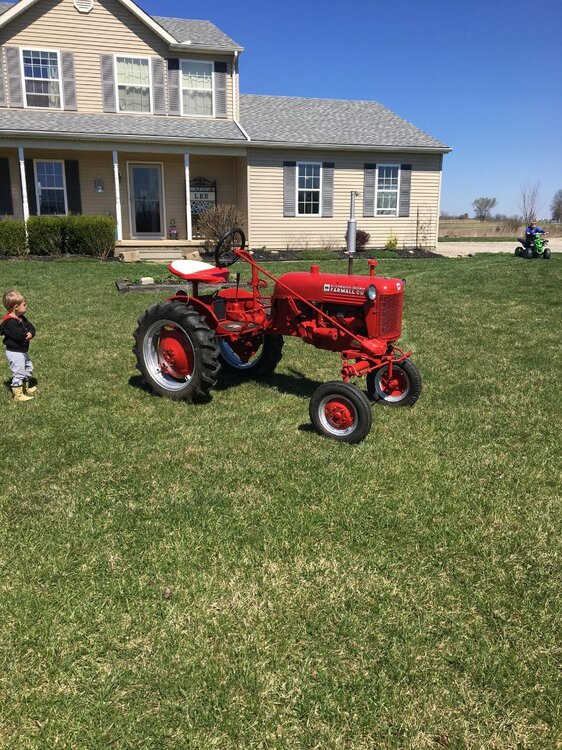
We we are finally finishing up our project. The tractor is back together, mechanically all we did was adjust the valves, change the manifold, and give it a tune up with new plugs and wires, but it is running really nice. We are hoping to have a chance to work it hard soon to get the garden ready. I think Isaac's youngest brother is a little envious. Brandon
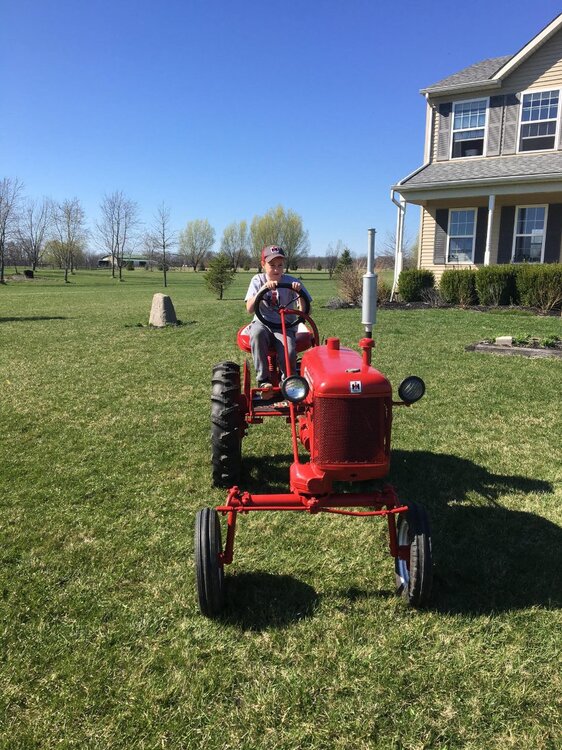
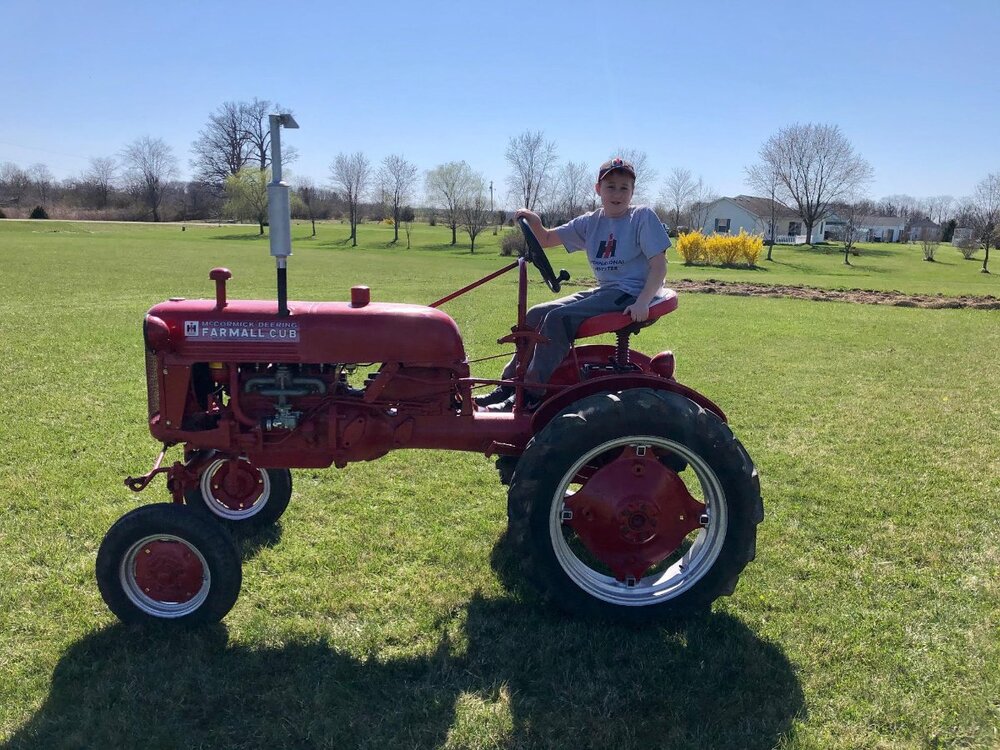
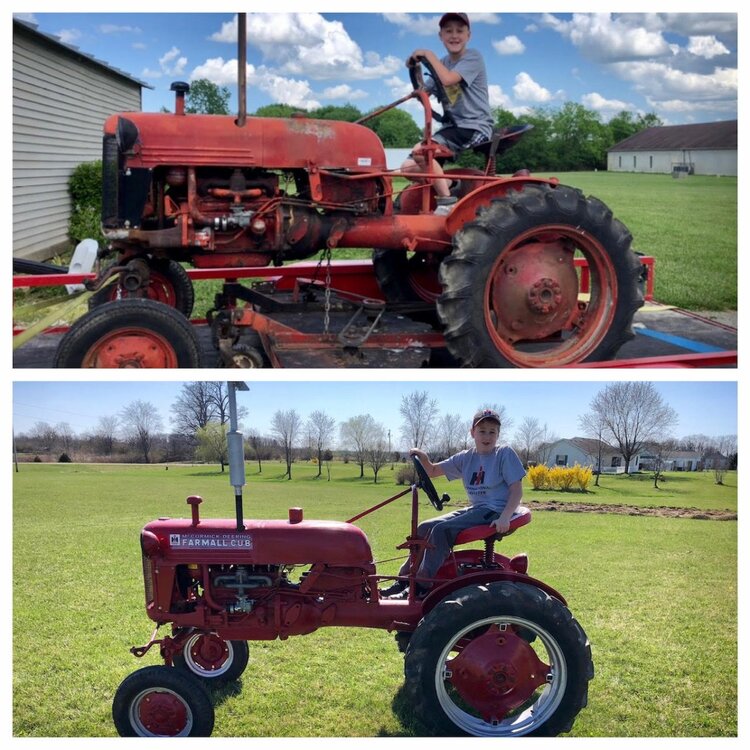 1 point
-
2/23/21 lights placed on bed and wired . there will be two more clearance lights on side rails of bed tool boxes placed Tony
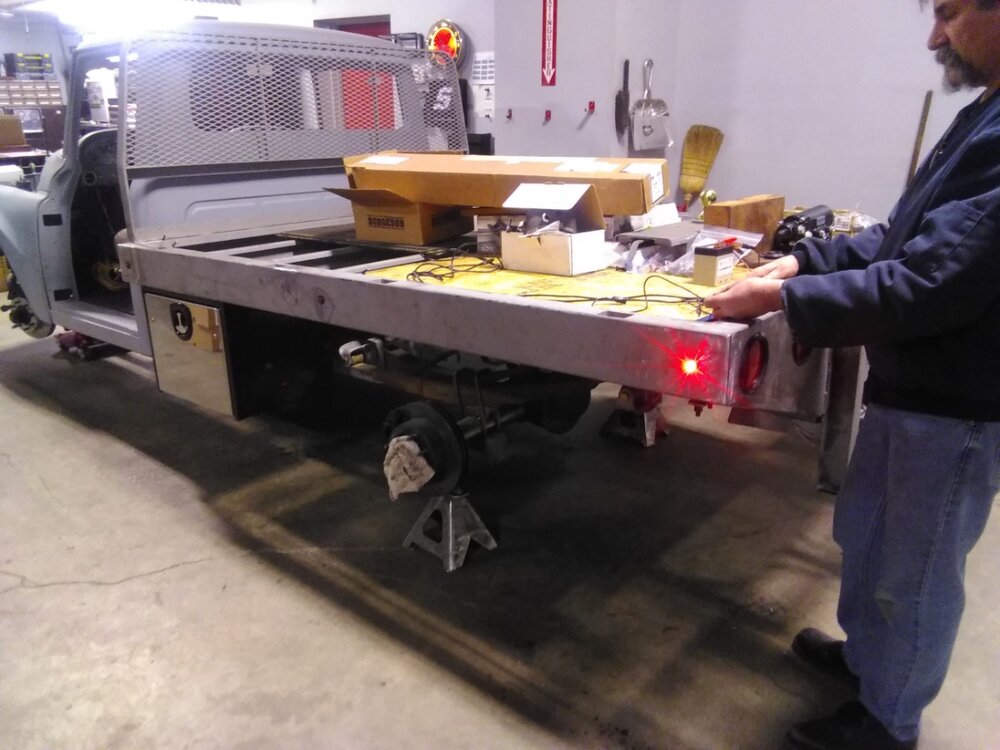

 1 point


