


New Englander
-
Posts
8,557 -
Joined
-
Last visited
-
Days Won
3
Content Type
Profiles
Forums
Events
Everything posted by New Englander
-
Yes. When I owned the Avionics Shop my partner found a nice International Harvester Metro Mite. It provided a nice canvas to have the Logo and name of our shop: Avionics Electronics, as well as the phone number. It never left the airport ramp and farthest it ever drove was to the MIT Lincoln Lab or Raytheon flight facilities - about two miles across the field. The Mite had a British engine and four on the column. It was the small work van of the day. If you ever saw the movie West Side Story you can see a whole fleet of Metro vans in the garage scene. They're bigger, not Metro Mites but look the same. I never drove anything with an automatic transmission until my father got a '56 Lincoln Capri which had a GM four speed Hydramatic. Yes party line rotary phone. My C60 and C70 still have dimmer switch on the floor. 5+2 transmissions. Mack Twin stick, nicer Road Ranger 8 and 13 speed. Various 5+2 shift patterns with strange backwards things 3 low to 4 low to 3 high to 4 high, etc. '40 Chevy with floor mounted starter. My Two-Cylinder has a foot starter. RH drive cars on the left side of the road all over the world. The most aggravating thing is unlike British cars Japanese RH drive directional signal switch is on the right, so I've run the wipers many times attempting to signal. Palmer Method cursive. It's now mostly anti-Millennial code. Yes, Manual is Millennial anti -theft. My kids were both taught on stick, son said he could leave the keys in his Jeep at school with no worries. Daughter on a recent trip to Italy with her boyfriend had to drive the rental as he couldn't.
-
Amelia Earhart, something not commonly known
New Englander replied to New Englander's topic in General Chat
I said I was only vaguely aware of her probably due to something I saw on a wall in the Gander FBO, so I looked it up. Here's some from the local historical society: http://www.ganderairporthistoricalsociety.org/_html_trans/Streets/Louise.Sacchi.htm -
Amelia Earhart, something not commonly known
New Englander replied to New Englander's topic in General Chat
I've heard ferry pilots asking for a position report from the aircraft in the flight levels. I remember one being a woman's voice but Louise had retired back in the early '80s I think and I wasn't flying the Atlantic until mid '80s. There's some info in the FBO building in Gander or otherwise I would not be aware of her. -
Amelia Earhart, something not commonly known
New Englander replied to New Englander's topic in General Chat
Ground loops on TO are not common but here's what happened to Amelia and the Lockeed Electra. In this picture you can see the direction finder loop. Apparently there was some confusion on frequencies with the CG cutter that was supposed to transmit the signal. Unlike more modern automatic direction finders that was a manual loop. I've actually used one! The loop is rotated so you'll get a null when the open end of the loop faces the station, any other position will give an increasing strength. NDBs or NonDirectionalBeacons have mostly been shut down in the US. Crossing Russia the controllers would turn them on in sequence when needed as they were always worried about invasion or something. Once when landing in Africa in a country not yet aligned to WGS84 (World Geodetic System 1984) our navigation system could get us to the listed coordinates but they were off a bit. No worries, they had an NDB approach except it wasn't working and not notamed in-op. We found the airport not too far away and landed. The NDB transmitter needed a tube! EDIT: I removed the ADF from my plane as there's little use except listening to talk radio. They work good on 50,000 watt commercial broadcast stations. From Pearl Harbor Museum: Simply but sadly put, Amelia Earhart ground-looped her Lockheed Electra on take-off. To begin her departure, she had taxied her aircraft to the Northeast end of the island (the nearest end to the current bridge). After lining up with the runway, she revved the engines on the powerful Electra. The aircraft started veering to the right. Earhart adjusted he throttles to correct the drift, but she overcorrected. It had rained heavily the night before, and the field was slick. The plane spun left into a full ground loop. All of the aircraft’s weight was put on the right landing gear as the left wing lifted the left landing gear off the runway. The combined weight of the heavily packed Electra and its three crew members was too much. The right landing gear collapsed. The Electra spun on the ground in the shower of sparks shown in the movie. The aircraft was salvageable, but not quickly. Amelia Earhart could not go on to her next landing, tiny Howland Island. She left that afternoon on the Steamship Malolo to return to California and plan her next attempt.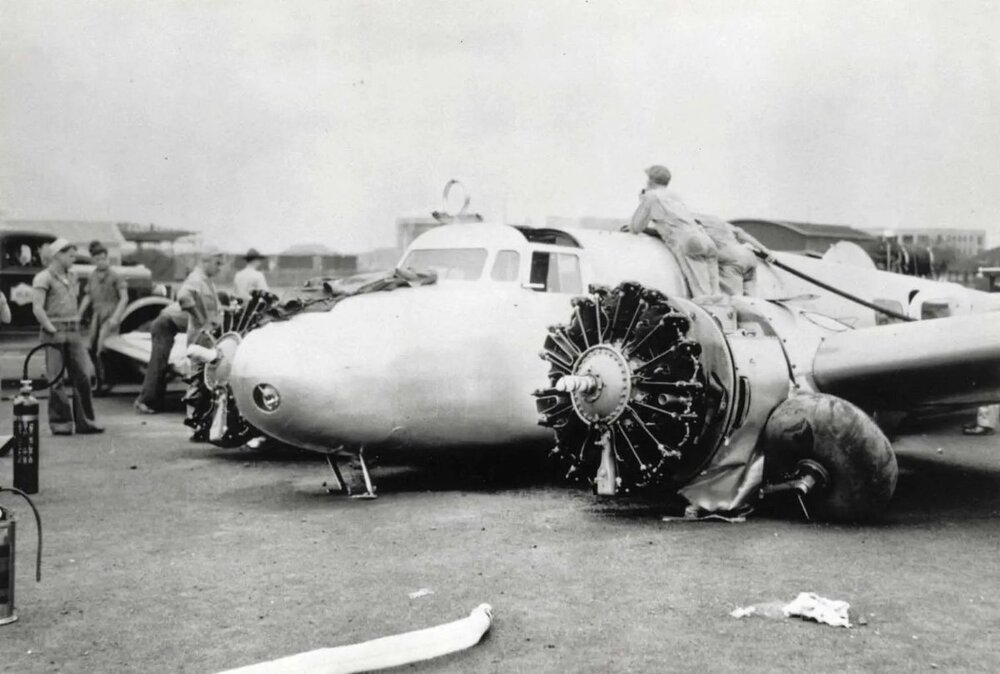
-
Bummer about the car! I was finally going to chip a big wild apple tree branch. It was full of apples and the deer finished them off. I knocked it down with the loader, got the chipper started and hooked to my pickup as I was going to just blow the chips into the woods. Rope broke on the MS250 and I knew the last time I was using the 034 The chain hit the dirt. Got 3' of rope from local Stihl dealer at $1./foot. Fixed that, Started chipping and the chipper ran out of gas. Threw 5 gallons in it and wasn't out of gas, filter clogged tight. Sunday and only parts store ope was VIP. Walked in with old filter and got the usual question "What's it for?" I told him the application won''t help, it's just a universal 1/4" filter and I don't care if it's metal or clear plastic. He handed me a lawn mower filter which wasn't going to help. No cell service, asked if they have wifi and he gave me the wrong password. Another employee gave me the correct one so I looked up a Wix number and he said he couldn't find it, so I gave him another Wix number, no joy. Finally he checked his computer and it said that he did have the first number and he found it. New filter fixed it and finally got the job done. Clear filter showed there's a lot of rust. $11. for filter at VIP. I ordered a 4 pack from Amazon for $22. to have on the filter shelf. Sunday projects seem doomed to have problems.
-
I wouldn't blindly throw parts at it. A bi-directional scan tool besides revealing codes can command shifts and you can actually hear a solenoid click. Removing power - disconnecting the wire harness should let it limp in 3rd. If it doesn't move it's mechanical - clutches or something serious broken. If pan is full of glitter and fluid burned change the cooler and the lines.
-
Amelia Earhart, something not commonly known
New Englander replied to New Englander's topic in General Chat
Maybe. Charles Lindbergh's legacy has lived on even though he was a pacifist (reformed) and never really screwed up. Yes she wasn't a very experienced pilot she learned fast and set many records. The planes of the day were not all that reliable or easy to fly. Being conventional gear (tail draggers) they wanted to swap ends on landing. Having flown the Pacific many times and seeing just how vast it is I appreciate the folks who did it with little more than a sextant. -
Amelia Earhart, something not commonly known
New Englander replied to New Englander's topic in General Chat
Helicopters are infinitely more complicated than gyros. The aerodynamics of powered rotors not to mention anti-torque make them so. There are a handful of manufactures making new one with some amazing performance. One of the below is what I think is in the hangar across from me. A retired captain has it and from seeing it fly it seemed fast so I looked it up: VNE (velocity, never exceed) is 140 MPH, quite a bit faster than most light helicopters. The M.A.S.H. Bell 47s are about 100 MPH, older Hillers around 80. One of the problems with a helicopter is retreating blade stall. The blade(s) moving opposite direction of flight begin to aerodynamically stall causing a roll in that direction. Non-rigid rotor systems have lead-lag issues plus ground resonance issues. Helicopters have collective control that change all blade pitch at once, Cyclic control that change the disc direction, anti torque pedals to control the tail rotor, etc. Gyro has stick and rudder. Gyro rotor is powered only to pre-rotate, then power has to be disconnected. -
Volvo marine diesel broken pushrods and sticking valves
New Englander replied to acem's topic in General Chat
A little googling says it’s not uncommon. I think if you get the sticking valves to move I would straighten the pushrods out, see if it runs, then pull the head and fix it right. No sense in running out of wind and having an inoperative aux or trying to dock with no engine. -
Ha! I was in a JFK terminal one night commuting to somewhere when a very drunken Scotsman accosted me looking for a phone box. Well, I had little chance of understanding him and he kept yelling it louder finally saying "a phone box! you daft 'ucker!! I started laughing when the light dawned on me and pointed to the wall of them sans "box" behind him. 😄
-
Amelia Earhart, something not commonly known
New Englander replied to New Englander's topic in General Chat
Sikorsky flew one in the late '30s that the military bought during WWII. I think there was one in Germany too. -
Amelia Earhart, something not commonly known
New Englander replied to New Englander's topic in General Chat
Any landing you can walk away from is a good one. If the plane can be used again it's a better one! -
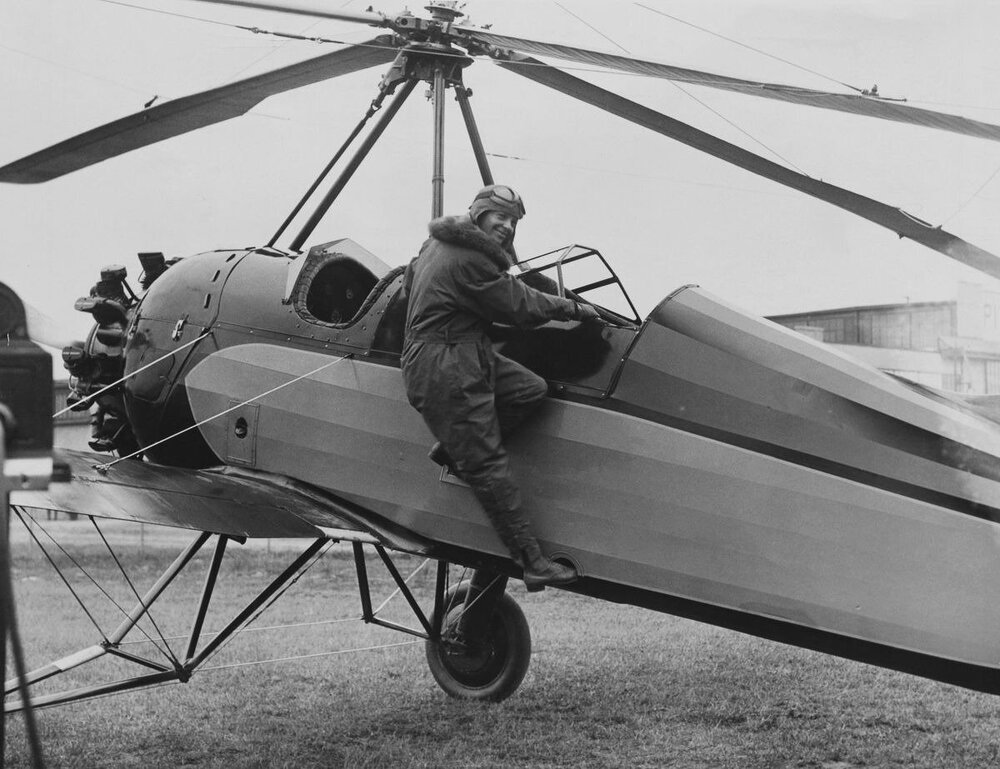
There's been a lot of media attention due to another failed attempt to find her plane. So while perusing the museum info thanks to Dave Downs. I came upon this. I knew she had set some other records but was unaware of this one: On April 8, 1931, Amelia Earhart, flying a Pitcairn PCA-2 Autogiro, reached an altitude of 18,415 feet (5,613 meters) over Bucks and Montgomery counties in Pennsylvania. The duration of the flight originating from Pitcairn Airfield, her second of the day, was 1 hour, 49 minutes. Throughout the 1930s, the Pitcairn team would develop and manufacture many different models of autogiros at Willow Grove, perfecting the technology which would later be used in the development of the modern helicopter.
-
I got a kick out of the L1011 tires - 32 ply!
-
I bet most of us on here can relate to this
New Englander replied to lorenzo's topic in General Chat
It's a trap! -
I know what it is but had no idea where the term came from. Google to the rescue: Etymology: The word "hoar" comes from Old English (hār), meaning "gray" or "old," because the dense, white crystals resemble an elderly person's white hair or beard
-
I bet most of us on here can relate to this
New Englander replied to lorenzo's topic in General Chat
I have this card framed I liked it so much! No wife isn't fat, she's on the treadmill every morning at 05:00. She gave me the card - twice because we laughed at it so much.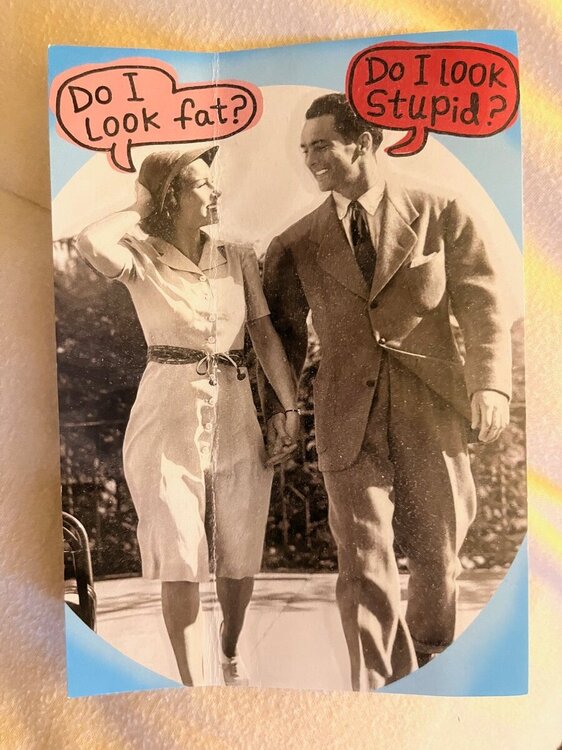
- 18 replies
-
- 10
-

-
Extended cab long bed. I almost always back in. It's easier as it needs less room to swing in small lots. If there's a sidewalk I stop before it and let the front end hang out a bit. I never back in to an angled slot as they're made to drive in. For the most part though, I back in most everywhere that I have to pull out onto a road, just time it and do it quickly so not to block traffic. The exception if I need access to the bed.
-
And so it is! When based in PHL I lived in nearby Blue Bell.
-
Volvo marine diesel broken pushrods and sticking valves
New Englander replied to acem's topic in General Chat
Tim the Tool Man Taylor! -
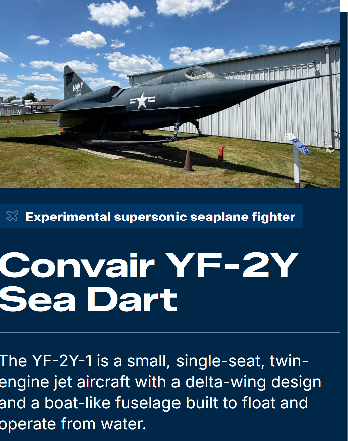
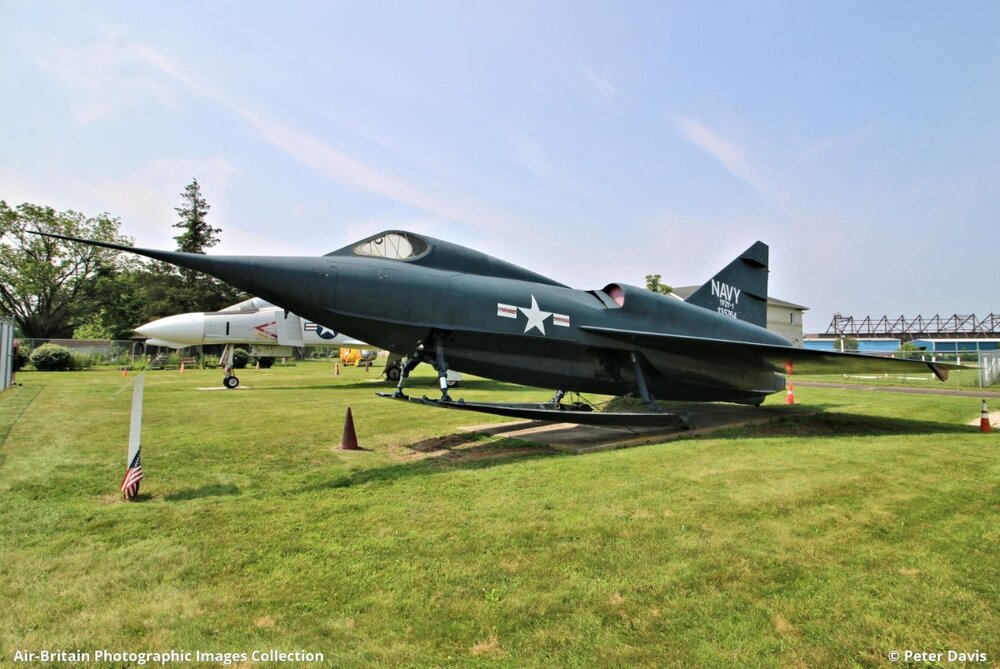
They really were not the fastest seaplane. This is the real record holder. There used to be a gate guardian outside the now closed Willow Grove Navy base:
-
Wow! Good job by your son! I only slightly knew about them as it was mentioned as the fastest seaplane in something I read when I was getting my seaplane rating.
-
I guess the tread with its steel belts is made to take stones, the sidewalls, not so much. Bad luck for sure!
-
Volvo marine diesel broken pushrods and sticking valves
New Englander replied to acem's topic in General Chat
Here's some spinning I've done on Continental engines. Lycoming exhaust valves are sodium filled and run cooler as they transfer heat up through the guide while Continental valves are not sodium filled and transfer heat solely through the seat. Lycomings stick due deposits, Continentals tend to burn. Continental requires a borescope inspection at each inspection and, if an asymmetrical heat signature is caught early enough, the valve can be lapped in place and continued in service. I've done it both successfully and unsuccessfully. The successful ones saved a lot of time and money. Of course with a diesel there's no nice big spark plug holes like an aircraft engine. Mike Bush sort of pioneered the procedure and filmed it here. He used a rope to hold the valve up to remove the keepers but I found out years ago that shop air pressure would do it. Back in the '70s Continental had a procedure to ream valve guides in place and we did it on the affected batch of engines that were on new Barons and Bonanzas that were delivered. -
Volvo marine diesel broken pushrods and sticking valves
New Englander replied to acem's topic in General Chat
I don't know if there's any way to do this on a diesel. Lycoming aircraft engines develop morning sickness where valves stick a bit when cold but operate okay once warmed up. If not addressed the valves stick farther open until eventually hit by a piston with bad consequences. The fix is to push the valve all the way into the cylinder and grab it with a pickup tool. That lets you run a reamer through, clean up the guide, and get the valve back in. Of course you have two 18mm spark plug holes to work through so I doubt there's any way to do it on a diesel. It's carbon and lead deposits that stick aircraft valves and may just some rust on the boat diesel. Maybe if you can't get them free pull the manifolds and look and maybe do the airplane engine trick but grabbing the valve through the ports. Gasket set can't be that expensive and if it's ugly you'll have it to pull the offending head. I've heard those Volvo auxiliary engines are reliable. Happy sailing!


