GaAgTech
-
Posts
43 -
Joined
-
Last visited
Recent Profile Visitors
416 profile views

GaAgTech's Achievements

Advanced Member (3/3)
58
Reputation
-
catch the coolant when draining Farmall 200
GaAgTech replied to jdsingleshot's topic in Technical IH Talk
Instead of a cap on the pipe nipple, I installed a petcock on my Super C and 200. Makes it easy to drain and no mess. I just turn the wheels to the right and put a funnel with a hose in the gap of the tires with the hose in a bucket.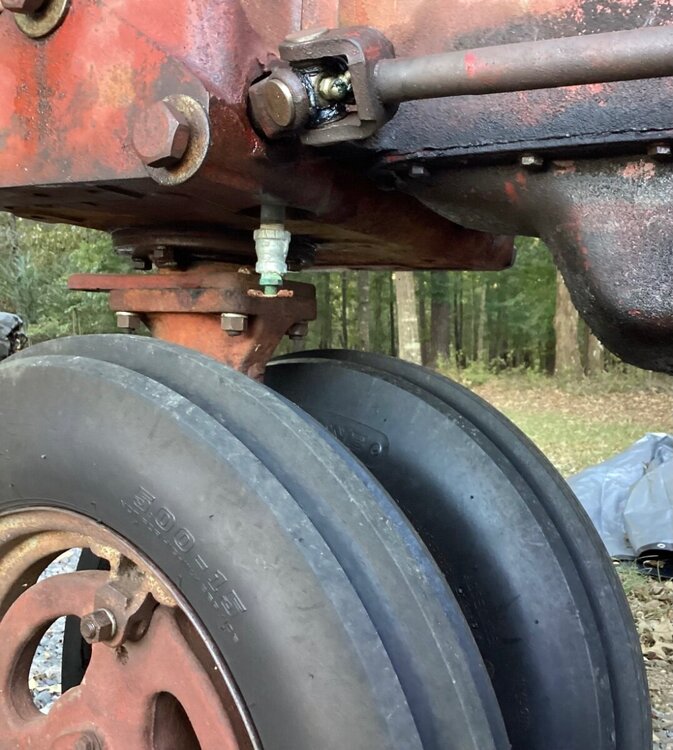
-
“Crazy Cooter coming at ya!” RIP Cooter Davenport
-
Best I can remember, the antenna ground was attached to a steel plate that just pulled up flush to the inside of the cab roof and was held in place by the antenna base. The antenna ground was a braided wire with no insulation and the other end was attached to a stud that pointed to the rear on the right cab post. There were also a couple of other insulated grounds (from lights and blower motor) on this same stud.
-
DO NOT USE Dot 3 or 4 brake fluid. It will ruin the seals in the master cylinders and the brake actuators. Go to a Case IH or New Holland dealer and get “Hydraulic Brake Oil”. 73344413 looks like the latest part number for quart bottle. This is a mineral oil based fluid. A lot of good money has been spent repairing the brake system on those tractors and other models when people didn’t check the owners manual or the little decal that states what to use and they dumped in some Dot 3.
-
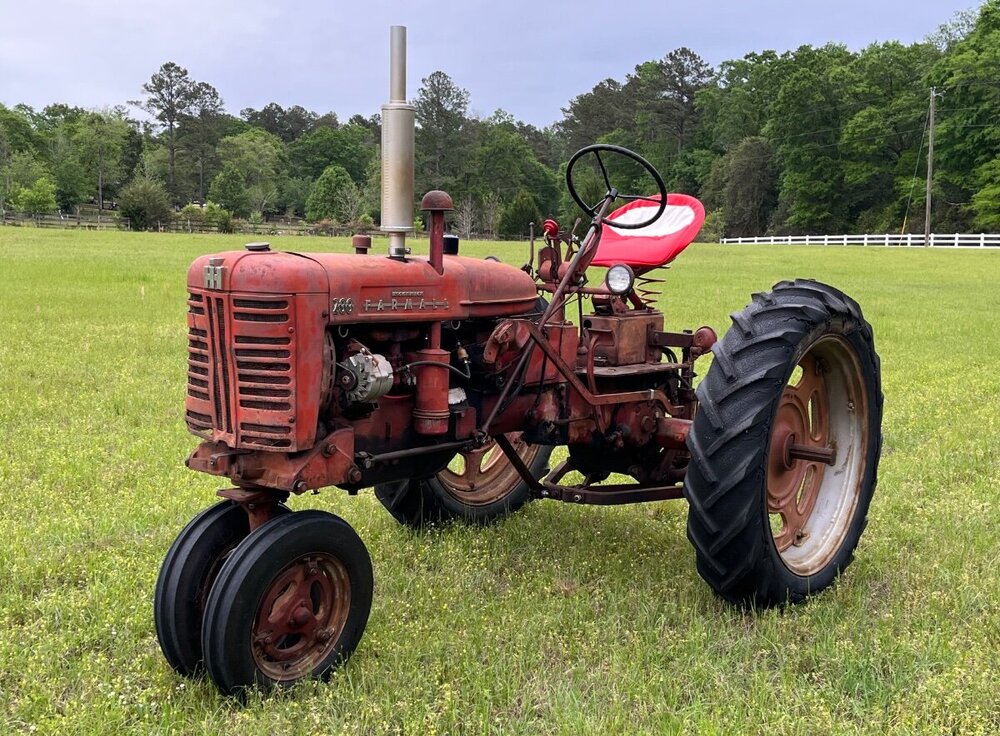
Yep. Won’t hurt a thing to remove the front bolster and support the bell housing. Engine will be just fine. Got a 200 myself. She is no beauty queen, but she runs and drives great. I’d like to see some pics of your project.
-
Gotcha. Had someone try to do the same thing once, but they only hooked up the assist cylinders.
-
What do you mean by “you have them plugged into #3 remote”? You do know that there are actually three lift cylinders. Two external assist cylinders and one internal main lift cylinder under the rock shaft housing. If you disconnected the tee going to the assist cylinders and plugged the metal line under the rear of the upper fuel tank then the internal cylinder can only let off it’s oil by leaking past the piston seal or the hitch valve has to release the oil.
-
If the tractor is stationary, can you slowly turn the steering wheel without the tractor actually turning? If so, I would do that for a few minutes, turning the wheel as fast as possible without the tractor actually turning. Then use a temp gun and check the temp of both cylinders. If one is leaking internally, it will be warmer than the other one. It is possible the problem is in the steering hand pump though. Does this tractor have auto-guidance?
-
380 CVT MY 2020 - no smoke when cranking, no start
GaAgTech replied to Clark Riley's topic in Technical IH Talk
Is the electric fuel pump running when the key is turned on? If so, open the bleed screw on top of the engine mounted fuel filter, turn key on and open bleed screw and see if fuel or air comes out. Also, with the key on, are there any faults coming up on the instrument cluster? As far as fuse and relay diagrams, if you have an operators manual, I assure you, there is a diagram and listing (with word descriptions, not just icons) in it. There may be two books. The front will say book 1 of 2 and 2 of 2 near the right bottom. Just look in the rear pages for the index under fuses. It’s there. The high pressure fuel pump just has a fuel control solenoid that is controlled by the engine ECM. I would not worry about it right now as it is normally open and receives power to basically close it down. When you turn the key off on a running engine, the ECM stops firing the electronic injectors. -
You can use a die grinder with cutoff disc and cut the crimped sleeve on opposite sides. Then spread the pieces apart and they will break at the banjo fitting. Pull the braided line off the fitting. The banjo fitting will be a hose barb that you can clamp a new hose to. At least that’s how I do it.
-
5.9 Cummins VE Injection Pump fuel shutoff solenoid removal???
GaAgTech replied to acem's topic in General Chat
Use an air hammer with a chisel bit on one of the flats near a hex point with it hammering counter clockwise loosening the solenoid. Works amazing on hydraulic lines and fittings. I use it to loosen a leaking hydraulic line (metal or hose) that couldn’t be accessed with a wrench without removing other lines that are in the way. And if you’re careful you can also tighten the line. Great tool that I’d never be without. -
Does the transmission oil smell burnt or look discolored? Based on the evidence when you cut the old filter open it’s a pretty sure bet that there is a burnt/damaged clutch pack. Not what anyone would want to hear. Upping the pressure if it is already in spec won’t help. The damage is done.
-
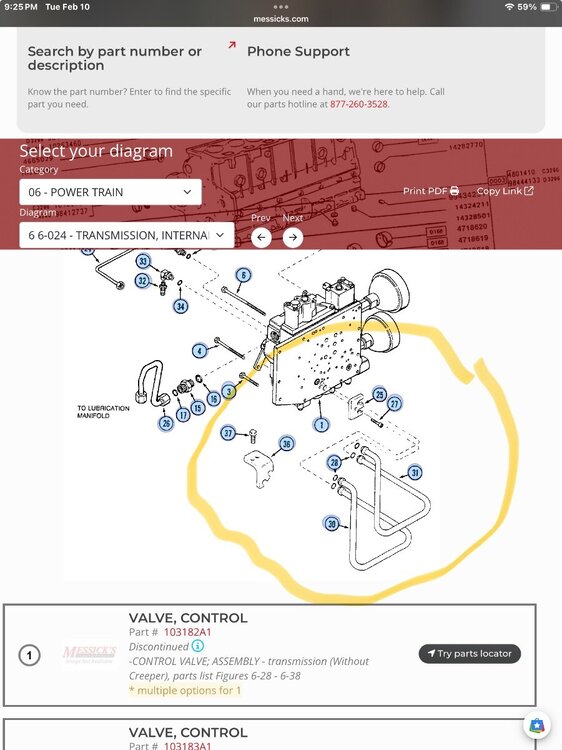
After I posted my response I was questioning my memory as to whether the before serial # break on the 7200’s had the external lines like the 7100’s or not. Messicks did not show a serial break for 72s and I’d have to dig out my service manual. The book way and the only way I’ve repaired a speed transmission was to split between the speed and range transmission, rolling the speed and engine out from under the cab. Then remove the speed transmission from the engine. All the speed shafts shim from the rear of the speed transmission, so even if you were able to remove the shafts from the speed transmission just by splitting at the engine, you would not be able to correctly shim the shaft/shafts without accessing the rear of the speed transmission. You may reuse all the original bearings and the shims may not change. But you wouldn’t really be able to check the shaft endplay to be sure. I never wanted to go into it twice. I do highly recommend removing the transmission control valve and replace the three check valves. Two of them are on the mounting plate and one on the middle valve housing if my memory is correct. You’d also want to look closely at the outer part of the shift cam where the detent roller ride. This part can wear down with a lot of use.
-
The 7200’s and 8900’s had internal odd/even lines. The only line external on top of the speed transmission above the odd/even (input) shaft is the lube oil line. So they can’t be capped off 7100’s had external lines that could be capped off easily Like Hydrotek stated, there are some check valves that can blow out and cause the odd/even clutches to modulate with the master clutch, which they are not designed to do. This will lead to clutch pack failure for odd or even or both.