


Pukeko
-
Posts
234 -
Joined
-
Last visited
Content Type
Profiles
Forums
Events
Everything posted by Pukeko
-
They need straight 30 weight ( hot climate 40 wt) Dont use multi grades in those old engines..I have a 600 as well.I prefer that weight in several of my old IH,s gassers too. I am also in Alberta,east of Edmonton.
-
dont touch it with a barge pole . Overpriced P.O.S. No parts available down there,nobody will know anything about them.They broke cranks due to harmonic balabcer breaking,blocks cracking due to poor casting,oil pump switch failing causing hard srarting problems .If an auto,probably 4L80trans ,certainly no parts or knowledgedown thereon that topic.They were replaced early 2000,s by the Isuzu "Duramax" for good reason. Being 2 wheel drive ,heavy front end ,pisspoor off road due to heavy front end .
-
that was wheat on last years canola stubble. We also did barley, canola and some oats ,plus meadow-brome grass for seed recovery.
-
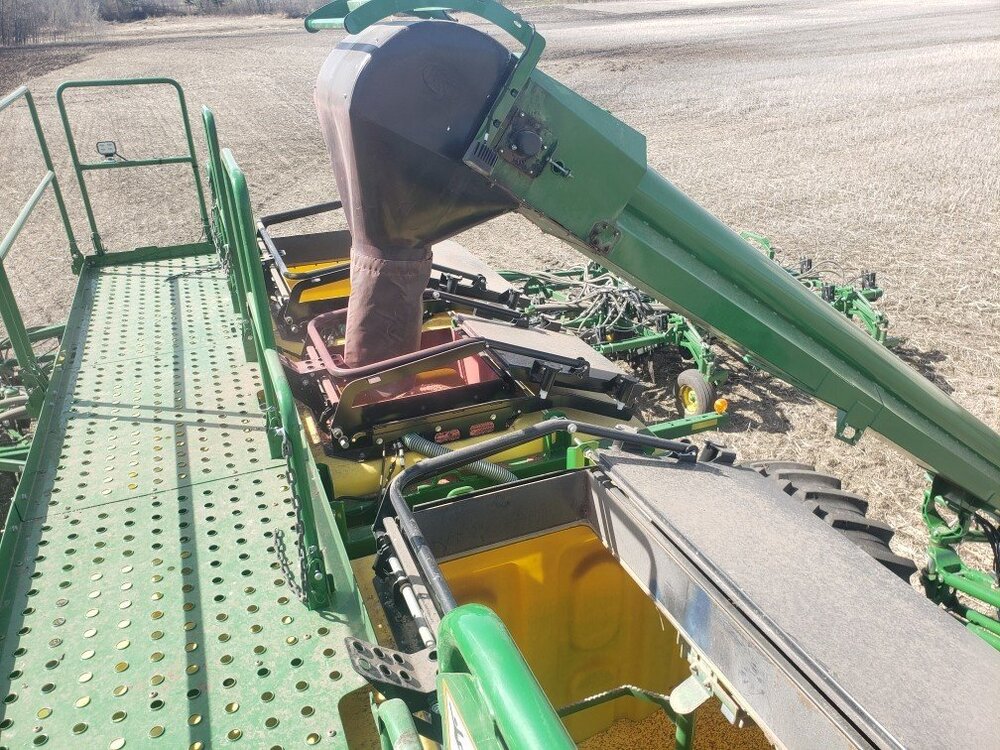
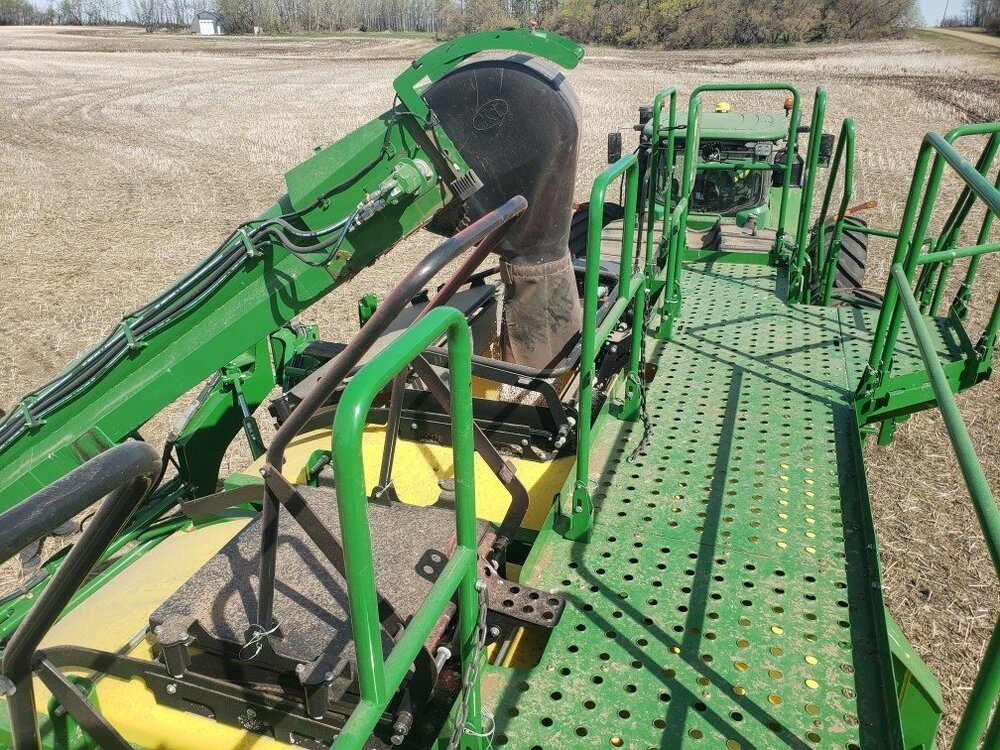
Just got finished before all of the heavy rain. Sorry, tractor is the wrong colour.
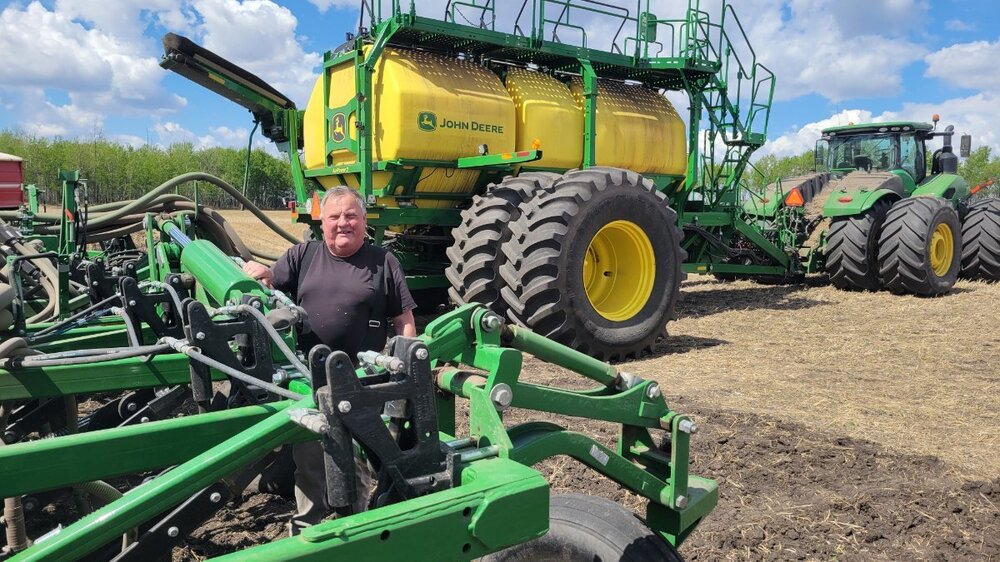
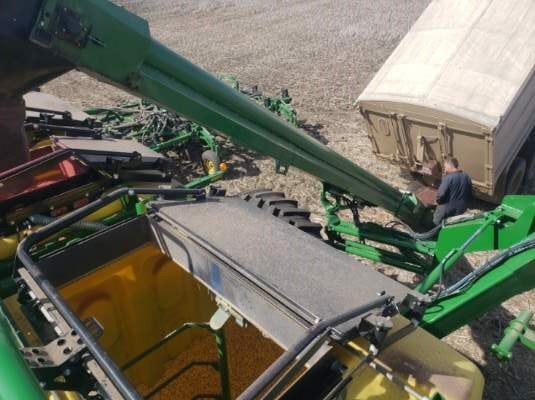
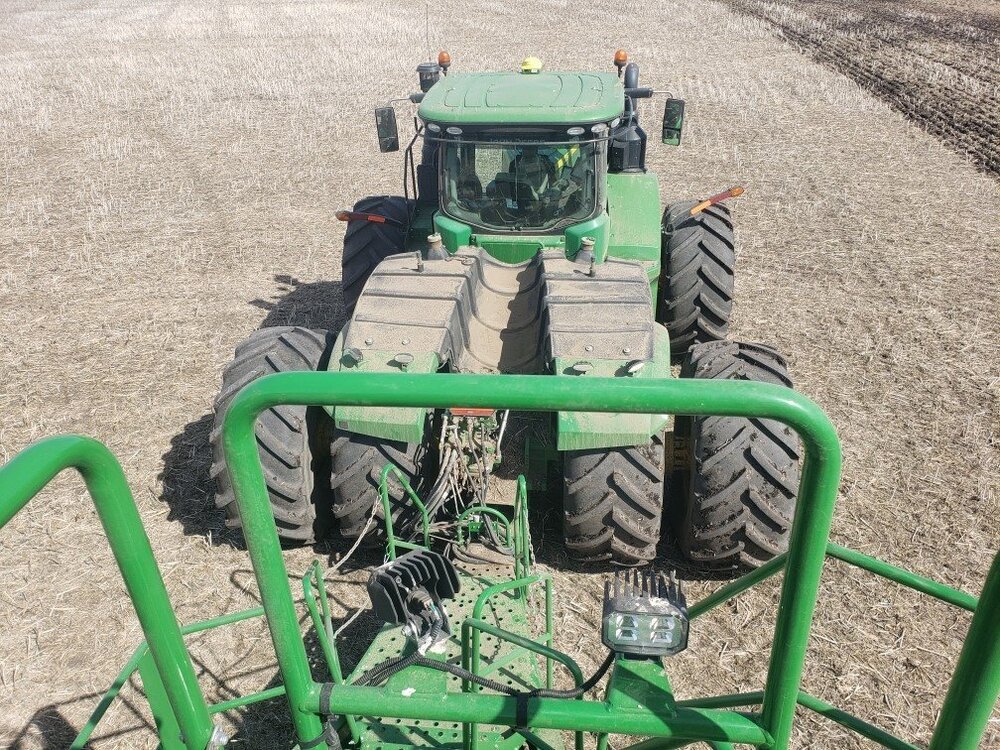
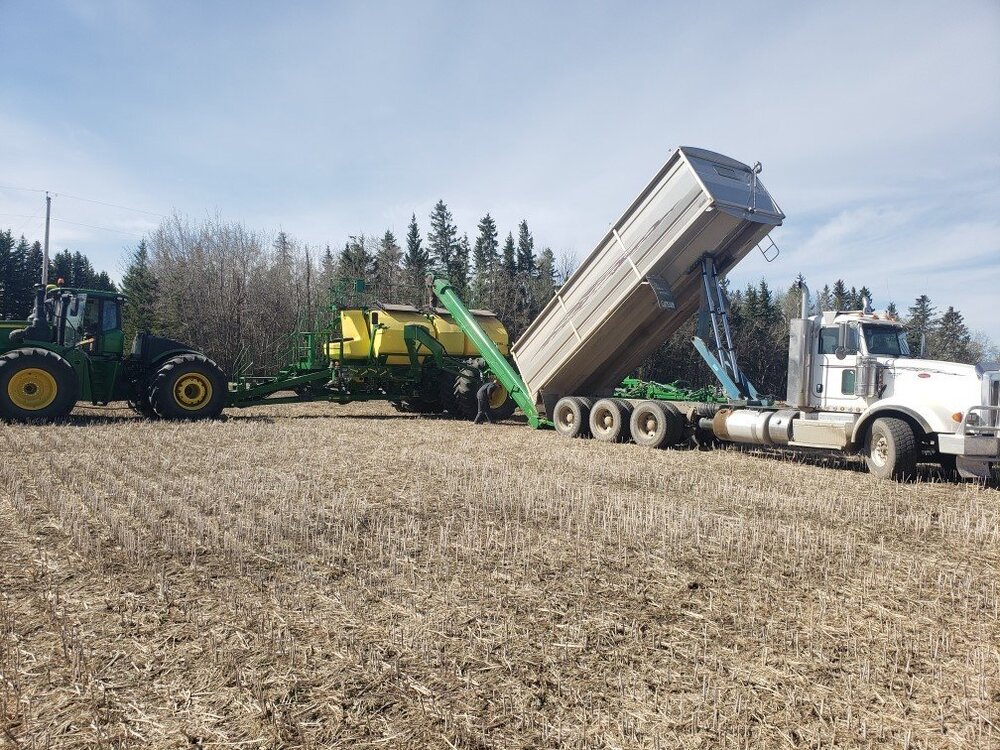
-
Wouldnt be a TS24 with those engines,probably a TS14.The early TS 24 I operated had the wide grill(59-60 vintage) and had a 12V71 in front, and a inline 6-71 in the back.3 speed Allison trans ,and about 26 yards struck capacity.
-
I worked for a guy back in late 70,s for several winters in the oil fields, and he had 6,s,7,s and 8K,s .Everything used Mobil XD 30 weight in engine ,trans ,finals, trans(stick and powershift),hydraulics .All with no problem. It simplified maintenance with the 40 odd cats he ran.At the low temps we worked in northern Alberta ,sometimes down to minus 55 C, the lighter viscosity helped. Note ,back then ,no fancy cabs,just a ROPS with lots of tarp.
-
I use Chevron "TorqForce" 10 W in my Cat 257B2 Skid steer.It has the specs for Cat and is 2/3 the price . Especially when you blow a hose or bust a line and its pissing on the ground. Exxon /Mobil makes the oil for Cat since 1987.Prior to that it was Chevron I think? Some "dyed-in - the - wool" Cat guys think Cat makes their own oil, but it is made to their spec by outsiders. Same as JD owners buying JD branded oil,batteries ,tools etc at twice the price .Nothing wrong with it if you insist on paying more I guess!
-
Looks like a little Fiat,maybe a 455 Ag.
-
I was referring to the top left pic ,black and white .I also think it is a TD14.I figured the TD20 was Farringtons machine .I also have a pic of it somewhere.
-
I think Allis is referring to the top left pic of the black and white really fuzzy ones. ( not the red 9B in the colored pics.)
-
They are 18,s.
-
Thanks for that.I wasnt aware he hadnt said the size of the place when you had posted,so my bad.I work for seasonally for a guy with up to 3000 cropped with 500 hp(green),so I get your point .Big implements ,(60 ft seed drill ,90 foot harrows etc)so cost per acre reduced.
-
Not trying to belittle you, but 60 to 100 hp for 10 lousy acres!!How much would you need if you had 500 acres ?1000hp on your reckoning.A 300 utility,Ford 3000 series ,Masse,y 135,235 ,D17 AC, then depending on budget474,574 IH,s and so on would be adequate in my opinion. Often it comes down to dollars,so even a good Super M with a.ftermarket 3 point hitch like Sandhillers would work It is just going to take a bit longer ,but you are saving a ton of money..Some of the older larger Ih,s get expensive if the PTO,clutches T.A.s etc crap out.. As far as narrow fronts go,a WF is slightly more stable on undulating ground when turning.When a tractor falls over,it is always from the rear when it cocks one of the wheels .If the NF is out wide, and not making a fast turn ,especially down a bit of a hill ,not the side of a mountain, there shouldnt be an issue .A trailing implement with considerable tongue weight, helps keep the bum down, more than a mounted implement based on C of G,and you are not usually turning with it down anyway.Wheel tractors are inherently unstable , more so with speed .One of the Ag Universities in the UK many years ago were doing experiments when the first ROPS were in their infancy .They had a couple of different makes flop over at as little as 16 Degrees angle when severely mishandled,and they were wide fronts.Even on crawler tractors pulling heavy discs,fertiliser spreaders,etc on hill country on contour work ,you try to minimise down hill turns ,because usually thats the time it can go pear shaped .and they are way more stable than any wheel tractor.I have many hours on those , and on scrapers(carry-alls,pans ,depending where you come from) and down hill turns ,even when loaded ,you try to avoid because they can flop over before you realise whats happening. So a WF or NF is fine if you are careful on hilly or undulating country. On flatter ground ,a NF works very well, especially in row crop applications with small or narrow headlands .Thats just my 2 cents, not everyone will agree ,but that their prerogative . ( NB. that spelling is correct)
-
Thats more like it Mr Marty.They are probably 10000 lb axles ,so you have 30000 lbs minus trailer tare weight. That would be about 8500 lbs, ( depending on manufacturer, they are all a bit different .My 40 footer tri axle dually is 9000) but you have an allowance for the truck axle .Up here in Canada I am allowed up to 16060 lbs on my truck( single axle semi ) with 24.5 rubber. Now on your 1 ton, you certainly wont have that much of an allowance ,but there is going to be some ,again depending on what your state allows. We are also allowed the max weight on the tires. I.e here in Alberta there are 12 235-80 ,10 ply 16 Inch tires on the 40 footer rated at 3042 lbs per tire (weight varies depends on manufacturer) at 80 p.s.i ,so I am good for 36000 gross on the trailer .I have been over some often ,but I get the allowance on the drivers so am well clear .Not sure what the rules are down there, and here it varies province to province re the numbers .Long story short ,that trailer will work great for you as long as the old chev is ok with the stopping part .and the good is that the trailer has three good braking axles to help with that part of it.
-
Another thing to consider is the strength of your ramps .I moved an Allis XT190 with a loader on my 20 ft tandem deckover trailer .The ramps are about 7 feet long, and are made out of 2 1/2 x2 1/2 x3/8 angle iron T hey weigh a ton ,but I still managed to bend them severely ,and the Allis is about 13000lbs with cab ,loader and fluid in tires .I had to block the back end under the rear hitch of the trailer .I have loaded lighter tractors on that trailer and had both the dually 1 ton Dodge and I ton Ford dancing off the ground when not blocked .so its imperative to block the trailer. I still think that that trailer is totally inadequate for your purpose .The frame is far too light for that weight ,as is the goose neck part.It looks like about 5 inch channel? If you only have to go a mile ,just drive the tractor there. Not trying to be a " safety nazis" as Hardtail put it ,but it is so easy to come unstuck on this type of exercise if all the boxes havent been ticked.For sure ,none of us here want to see it go pear shaped on you.
-
-
I Hi Mr Marty 51,I am assuming that is the trailer you are going to use? If so ,there are a couple of things to consider.They look like 14.5 wheels and tires ,the same as used for mobile home transporting .If the axles are rated at 7000 lbs ,you still will be way over weight as the load will be about 28000 lbs plus with trailer . How good are the tires ,and does it have brakes? That looks like a jobber trailer ,certainly not military.They never ran that size tires or that style trailer with that hitch. Another thing,that "goose neck" style hitch is not rated for the weight you want to carry.There are no gussets or webs where there should be ,so that usually is what determines the weight rating for various trailer s as well as axles,brakes ,tire sizes etc .It is one thing for your 1 ton Chev to get it moving ,but the main consideration is getting it stopped ,especially in a hurry or marginal conditions. I am sure you are ware of that .I pull 3 tractors on my tri-axle dually 40 footer behind my Sterling single axle semi (about 16000 lbs tare weight ) on 24.5 rubber ,all up at about 36000 lbs ,and on some of the smaller hills around here ,it sure knows what is behind it when I am slowing down etc.so the point I am making your chev is about 8000? so its all about controllability.You dont wont the "cart pushing the horse". On a different ,one thing to consider when you are driving your 14 down the hill,when you want to turn right for example ,you can "cross control" That is instead of pulling your right clutch lever, and having to stomp on your right brake ,you gently pull the left clutch and let that track free wheel to make the turn to the right.Conversely for the lerft as well use the right clutch.When you do this ,have you foot hovering above the brake pdal,as the steeper it is ,it can get going quite quickly so you need to be ready to slow it down when you have made your turn.Some people may disagree with my comment re turning,but where I came from we,I and many others operated on very steep country at times ,and this was a very common practice with seasoned operators.I have been following your progress re ,the old 14 ,and it seems your are ticking all the boxes! Good luck.
-
Looks like 544 fenders?
-
The white 2-60 is a rebadged Fiat 640 built in Italy,some in Indiana too,I think.
-
All the IH,s of that era were positive ground up to the time when they began using alternators, late 50,s ,early 60.s, depending on the model.Rule of thumb,if generator equipped ,it was positive ground,with the odd exception,one being the 350 utility,but I am not positive( excuse the pun) on that one .
-
Hi Lance,I have mislaid your phone # .Maybe you could send it or phone me ,thanks .
-
The last grey fender super majors were sent to Nth America ,and badged as 5000,s and are the same shape ,style as TN Hillbillys. The next series (X) were the square grille models which came from England (2000,3000,4000 ,5000) .The 5000 in this series first came out with a 233 cu.in engine @ 67 hp This was later increased to 256 cubes and 73 hp.
-
Sorry ,double post
-
sthe last ones were the New Performance Super Majors with the mechanical governor ( yours would have the pneumatic governor ) They were 54 HP,grey fenders and wheels , finished early 64.None of that series(EIADDN) had a 6 cylinder,all 220 cube 4,s . All the Super majors had disc brakes. I see yours has 36 inch rubber.Most were on 30,s.


